
Table of Contents
- What Makes Sri Lankan Art Culturally Significant
- Sri Lankan Art History: From Ancient Kingdoms to Modern Times
- Buddhist Art in Sri Lanka: Symbolism and Sacred Imagery
- Traditional Sri Lankan Paintings: Techniques and Themes
- Sculpture, Carving, and Craftsmanship
- Authentic Sri Lankan Paintings: Recognizing Real Craftsmanship
- Dance, Performance, and Living Traditions
- Why Sri Lankan Art Matters Today
- Frequently Asked Questions
Last Updated: October 15, 2026
What Makes Sri Lankan Art Culturally Significant
Sri Lankan art is one of the world's most distinctive artistic traditions, shaped by thousands of years of cultural heritage and spiritual devotion. It bridges the sacred and the everyday, telling stories of religious belief, social values, and historical identity through painting, sculpture, dance, and craftsmanship.
What separates Sri Lankan art from other traditions is its visual language: every brushstroke, carved detail, and motif carries meaning rooted in Buddhist philosophy, regional history, and centuries of refined technique.
This matters now because authentic cultural art is becoming harder to find. Mass production and tourism have flooded markets with imitations lacking the craftsmanship, intention, and community support of genuine work.
Sri Lankan Art History: From Ancient Kingdoms to Modern Times
The artistic traditions of this island nation evolved across distinct historical periods, each leaving marks on how artists approach color, composition, and subject matter. This timeline reveals why certain motifs recur, why specific techniques endure, and how contemporary artists build on centuries-old foundations.
The Ancient Period and Sigiriya Frescoes
Between the 5th and 6th centuries, the Sigiriya Rock Fortress stood as one of the ancient world's most remarkable artistic achievements.
The Sigiriya frescoes reveal something crucial about early Sri Lankan artistic values: the emphasis on serenity, elegance, and spiritual presence. Works like the Sigiriya frescoes documented by UNESCO World Heritage demonstrate how ancient artists understood the relationship between figure and space.

These precedents established what Sri Lankan art could be: refined, spiritually intentional, and technically sophisticated. Contemporary classical artists still reference Sigiriya's compositional principles and color palettes.
Medieval and Colonial Periods
The medieval period saw the rise of the Kandyan kingdom, the cultural heartland of Sri Lankan artistic practice. Artists developed the aesthetic principles that define traditional painting: rich reds and golds, symmetrical composition, and narrative clarity. Temple paintings told stories of Buddhist belief, moral instruction, and historical events in a visual language common people could understand.
The colonial period complicated this trajectory. European influence introduced new materials, perspective techniques, and subject matter, yet Sri Lankan artists maintained their distinctive visual language, synthesizing external influences with inherited techniques. This established the foundation for what we now recognize as authentic versus mass-produced work: genuine pieces honor the classical vocabulary while allowing individual artistic voice.
Buddhist Art in Sri Lanka: Symbolism and Sacred Imagery
Buddhist tradition shapes nearly every significant artistic work in Sri Lankan culture. Concepts of enlightenment, suffering, and liberation translate into visual forms encountered repeatedly across paintings, sculptures, and architectural spaces.
Religious Beliefs Reflected in Artistic Forms
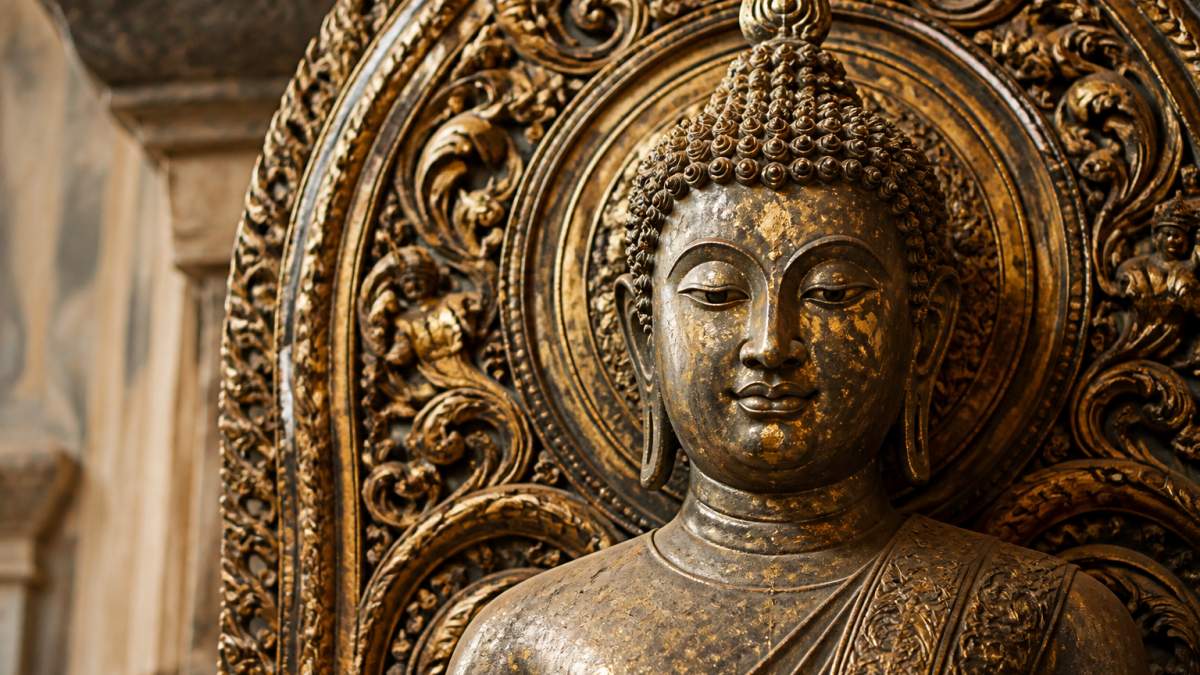
The central figure in Sri Lankan Buddhist art is the Buddha, depicted in poses carrying precise spiritual meaning. The meditation pose signals inner peace and enlightenment; the teaching pose, one hand raised, represents the transmission of wisdom; the reclining pose indicates passage into final nirvana.
Beyond the Buddha, artists depict bodhisattvas (enlightened beings who delay final liberation to help others), celestial beings, and protective deities. Bodhisattvas appear serene and compassionate; protective deities display fierce expressions to ward off spiritual obstacles.
Color reinforces these meanings: gold represents enlightenment and spiritual purity, red suggests compassion and life force, blue indicates wisdom and protection.
Sacred Spaces and Temple Architecture
Buddhist temples are repositories of artistic tradition. Their architecture, with central shrines, circumambulatory paths, and ornamental details, embodies Buddhist cosmology, while wall paintings instruct the illiterate, inspire devotion, and create spaces conducive to meditation.
Temple architecture shows how Sri Lankan artists integrated symbolism into the built environment: protective demon carvings guard entrances, painted narratives cover interior walls, and Buddha sculptures occupy positions of honor. Preserving these spaces depends on supporting authentic contemporary artists, who maintain techniques and knowledge that would otherwise disappear.

Traditional Sri Lankan Paintings: Techniques and Themes
Painting in Sri Lanka developed distinct technical approaches refined over centuries. Understanding them helps collectors distinguish authentic work from mass production.
Wall Paintings and Narrative Art
Traditional Sri Lankan wall paintings tell stories through sequential scenes. Artists arranged figures and events to guide the viewer's eye through a narrative sequence.
The technique requires specialized knowledge: artists prepared plaster surfaces, applied mineral pigments mixed with natural binders in precise proportions, and often incorporated gold leaf. This knowledge passed from master to apprentice, creating an unbroken lineage of technique.
What distinguishes authentic narrative paintings is compositional sophistication: figures occupy space with intention, backgrounds suggest context without overwhelming subjects, and proportions follow classical principles. Mass-produced imitations lack this depth, with flat figures, hasty backgrounds, and no visual coherence.
Color, Symbolism, and Visual Language
The palette of traditional Sri Lankan painting is deliberately limited: earth pigments, ochres, umbers, and iron oxides, supplemented by imported lapis lazuli for blue and vermillion for red.
Gold leaf serves a specific function: it marks sacred or important elements rather than simply decorating. A figure surrounded by gold commands attention and signals spiritual significance, and restraint in its use keeps the effect meaningful rather than garish.
The visual language extends to gesture and positioning: mudras (symbolic hand positions) communicate spiritual concepts, body posture indicates spiritual state, and facial expression tells the viewer how to respond. Collectors who understand this language read paintings with deeper comprehension.
Sculpture, Carving, and Craftsmanship
Sculptural traditions in Sri Lankan art demonstrate the same commitment to technical mastery and symbolic precision found in painting. Stone and wood carving represent distinct practices, each with its own aesthetic and functional purposes.
Stone and Wood Carving Traditions
Stone carving developed primarily in service of temple architecture and religious imagery. Sculptors worked with granite, limestone, and other local stones to create Buddha statues, protective guardians, and decorative elements.
Wood carving served different purposes: ritual masks, decorative temple panels, and functional objects like doors and window frames. Wood allowed more intricate detail than stone, and carvers exploited this to create pieces of extraordinary delicacy.
What separates authentic carved work from mass production is visible in the execution.
Materials matter too. Authentic sculptors work with local woods and stones used for centuries, which age and patina in characteristic ways, while imitations use cheaper substitutes that never develop the same visual character.
Masks and Performance Art
Mask carving connects to ritual performance, specifically the devil dance (Sanniya) and other ceremonies. These masks are functional tools for spiritual and healing rituals, carrying the energy of repeated use and the intention of audiences seeking healing or blessing.
Mask carving follows strict iconographic principles: each demon or spirit type has specific facial features, expressions, and decorative details, so a skilled carver can identify a mask's purpose by its features.
The Sri Lankan mask-making traditions documented by anthropological studies reveal how these objects function as both artistic achievements and spiritual tools. When you purchase an authentic mask, you're acquiring an object that carries cultural meaning beyond its visual appeal.
Authentic Sri Lankan Paintings: Recognizing Real Craftsmanship
The market for Sri Lankan art ranges from genuine works by established and emerging artists to mass-produced imitations designed to look traditional. Learning to distinguish between them protects your investment and your ability to support authentic creators.
What Separates Authentic Work from Mass Production
Authentic paintings display technical sophistication on close inspection. Brushwork varies, with bold strokes alongside delicate ones, proving individual execution. The composition shows understanding of classical principles: balanced asymmetry, careful negative space, and figures positioned with intention.
Materials tell a story. Authentic artists use quality canvas, professional-grade pigments, and traditional techniques, building thin glazes that create depth and luminosity. Mass-produced work uses cheaper materials and faster methods, so the paint sits on the surface rather than integrating into the work.
Signature and provenance matter. Authentic artists sign their work, keep sales records, and can discuss their process and influences, while mass production involves anonymous workshops where no individual receives credit.
Supporting Local Artisans and Cultural Preservation
Choosing authentic Sri Lankan art is a choice about what gets preserved and what disappears. Authentic artists study under masters, practice for years, and develop individual voices within traditional frameworks.
The UNESCO guidelines on intangible cultural heritage preservation emphasize that cultural traditions survive through active practice and economic support. When artisans can't earn living wages, they abandon their practice.
AARTZY exists to address this problem. By giving artists a platform for global exposure at no cost, we ensure authentic creators reach collectors who value their work.
Dance, Performance, and Living Traditions
Sri Lankan artistic traditions extend beyond visual media into embodied practice. Dance and performance arts are living cultural expressions that evolve while maintaining connection to historical precedent.
Classical forms like Kandyan dance developed in royal courts and temple contexts, preserving specific movements, rhythms, and narratives across generations.
Contemporary performers build on these foundations. Some work within strictly classical frameworks; others synthesize traditional movement with modern influences, creating hybrid forms that speak to contemporary audiences while honoring ancestral practice.
Preservation depends on continued practice and transmission. Young dancers study with established masters, learning not just movements but the spiritual and cultural context that gives them meaning, while performance venues let practitioners earn income and audiences experience these arts directly.
Why Sri Lankan Art Matters Today
The cultural significance of Sri Lankan art extends beyond historical interest or aesthetic appreciation.
Collecting authentic Sri Lankan art connects you to a living tradition. The artist whose work hangs in your home is actively practicing and contributing to cultural preservation, and your purchase enables them to pass their knowledge to the next generation.
The aesthetic impact matters too. Authentic Sri Lankan art brings visual richness, symbolic depth, and historical resonance into domestic spaces.
Understanding the cultural significance of Sri Lankan art also changes how you experience travel, museums, and cultural spaces.
For collectors seeking authentic, culturally meaningful work, AARTZY offers curated access to pieces that embody these values. Pieces like the Maiden of Sigiriya, depicting one of the renowned Sigiriya frescoes, connect you directly to ancient artistic achievement while supporting contemporary creators. The Celestial Maidens of Sigiriya captures the ethereal beauty of historical inspiration rendered through modern artistic practice. For those drawn to Buddhist symbolism and spiritual imagery, the Pethikada Painting demonstrates how contemporary artists work within sacred traditions. Functional art like the Maru Sanni and Naga Sanni Mask Wall Hanging brings the living traditions of performance and healing into your space.

The market for Sri Lankan art will continue to evolve, mass production will likely expand, and authentic practice will face ongoing pressure.
Frequently Asked Questions
How does Sri Lankan art reflect the island's religious traditions?
Sri Lankan art is deeply rooted in Buddhist philosophy and symbolism. Paintings, sculptures, and architecture frequently depict Buddha, scenes from Buddhist texts, and spiritual concepts like enlightenment and serenity. Religious imagery dominates temple walls, carved stone figures, and traditional paintings.
What are the main forms of traditional Sri Lankan paintings?
Traditional Sri Lankan paintings include wall paintings found in ancient temples and fortresses, narrative art depicting religious and historical scenes, and contemporary works inspired by classical techniques. Painters use natural pigments and oils to create scenes featuring Buddha, celestial figures, and cultural narratives. The Sigiriya frescoes represent some of the most celebrated examples, showcasing graceful figures in traditional attire. Modern authentic paintings continue these traditions while incorporating contemporary perspectives and materials.
How can you recognize authentic Sri Lankan art?
Authentic Sri Lankan art displays careful craftsmanship, use of quality materials, and deep cultural knowledge reflected in symbolism and detail. Genuine pieces often come directly from established artisans or verified galleries that support local creators. Look for evidence of hand-painting or carving, unique variations that indicate individual creation rather than mass production, and clear artist attribution. Reputable platforms provide artist verification, secure shipping in protective crates, and transparent information about materials and creation methods.
What is the cultural background of Sri Lankan art?
Sri Lankan art emerges from thousands of years of history, shaped by Buddhist kingdoms, trade routes, and diverse communities. Ancient periods produced the iconic Sigiriya frescoes and temple sculptures. Medieval periods saw the development of intricate carving and architectural traditions. Colonial influence introduced new techniques while local artisans preserved traditional practices. Today, the cultural background reflects this layered history: spiritual devotion, regional identity, craftsmanship excellence, and a commitment to preserving heritage while creating contemporary work that honors ancestral traditions.