
Table of Contents
- What Makes Art Ethical: Direct Support and Fair Trade
- How to Verify Authentic Sri Lankan Art
- Traditional Craft Techniques and Cultural Significance
- Are Original Sri Lankan Paintings Worth the Price
- Shipping Original Artwork Internationally: What to Expect
- Avoiding Tourist-Trap Commission Shops and Middlemen
- Building Your Collection: From First Purchase to Investment
- Frequently Asked Questions
Last Updated: September 19, 2026
What Makes Art Ethical: Direct Support and Fair Trade
When you buy ethical art from Sri Lanka, you're choosing where your money goes. Direct-to-consumer platforms ensure the artist receives a higher percentage of the sale price.
Fair trade principles mean the artist retains creative control. When you buy from galleries like AARTZY that work directly with artists at no cost to them, the artist keeps their integrity intact and you get a piece with a real story.
Traditional craft techniques matter too. A handcrafted batik painting or hand-carved wooden sculpture takes time and skill.
How to Verify Authentic Sri Lankan Art
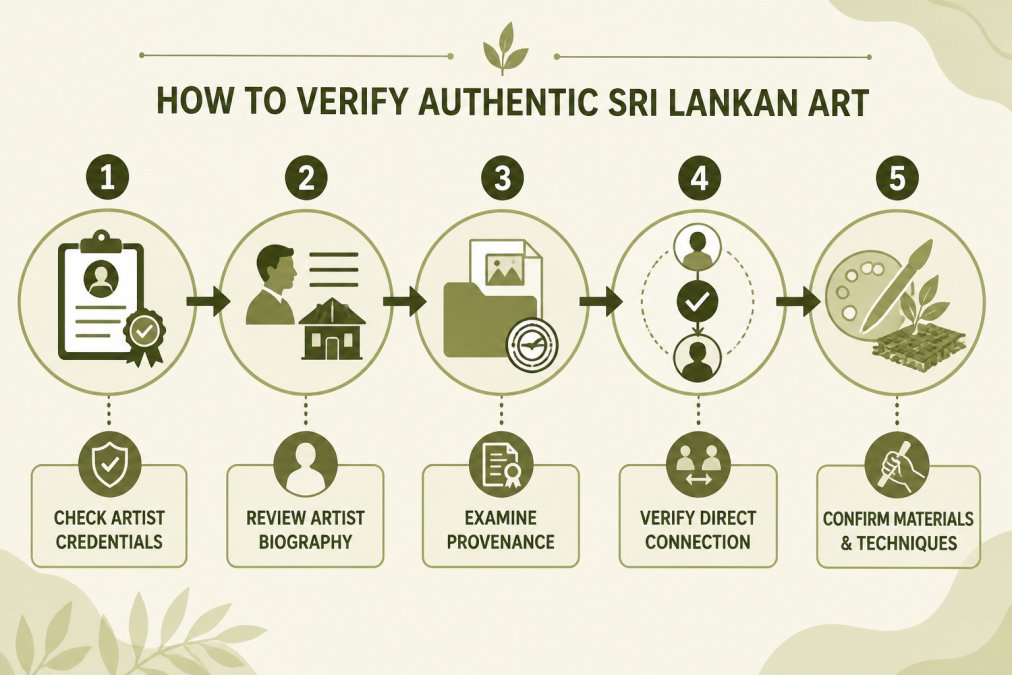
Use this checklist to confirm you're buying from a genuine artisan, not a middleman or mass-producer.
Step 1: Verify Artist Credentials and Certification
Legitimate artisans may hold certifications from recognized craft guilds. Ask the seller directly: "Is this artist certified?" and "By which organization?" If a seller cannot provide verifiable certification or direct artist contact, that's a red flag.
Step 2: Research Artist Biography and Workshop Details
Authentic artisans have documented histories. Request the artist's full name, years of experience, training background, and workshop location. Cross-reference across the artist's website, social media, and selling platform, they should tell the same story.
Step 3: Examine Provenance Documentation
Every authentic piece should come with documentation including the artist's statement, materials, creation date, and techniques. Request a Certificate of Authenticity signed by the artist or seller. Examine documentation for specificity: "Hand-painted acrylic on canvas using traditional motifs inspired by Kandyan temple designs" is authentic; "handcrafted art" without detail is not.
Step 4: Verify Direct-to-Consumer Connection
The artist's name and story should be front and center on the product page. Can you contact the artist directly?
Step 5: Confirm Materials and Handcrafted Techniques
Ask for specific material details: natural or synthetic dyes, single-block or assembled wood, visible brushstrokes. Request close-up photos. Authentic handwork shows variations, color inconsistencies in batik, tool marks in carving, unique brushstrokes, proving human creation. Mass-produced items aim for uniformity; authentic work celebrates individuality.
Red Flags That Signal Middleman or Mass Production:
- Artist name is vague, generic, or changes between listings
- No Certificate of Authenticity or provenance documentation
- Seller cannot provide artist contact information or workshop details
- Price is negotiable
- Product description uses phrases like "artisan-inspired" or "handcrafted style" instead of specific technique names
- No visible variations or imperfections in the piece (uniformity suggests factory production)
- Seller discourages questions about the artist or creation process
Traditional Craft Techniques and Cultural Significance
Sri Lanka's traditional crafts carry generations of knowledge. Batik creates intricate patterns by hand. Wood carving produces sculptures with cultural motifs rooted in Buddhist and Hindu traditions. Mask making involves hand-painting and carving masks used in classical dance.
These techniques matter beyond aesthetics. Each motif tells a story, a mask represents specific characters in Kandyan dance, a tapestry pattern references temple designs or local flora. Purchasing traditional art preserves cultural heritage factories can't replicate.
Are Original Sri Lankan Paintings Worth the Price
Original paintings command higher prices than prints. A painting like Nine Arch Bridge Sunset at AARTZY ($1,109.99) represents weeks of work using professional-grade acrylic and impasto techniques. You're investing in a one-of-a-kind object created by a specific person.

A high-quality print costs less because it's a reproduction, not the artist's direct creation. Originals have investment potential, as an artist's reputation grows, early works appreciate in value.
The price reflects materials: professional canvas, artist-grade acrylics, and archival framing. Professional stretching, framing, and secure shipping in crates with tracking protect your investment.
Market value depends on the artist's recognition and the piece's uniqueness. The real question is whether you value owning something authentic and supporting the creator directly.
Shipping Original Artwork Internationally: What to Expect
Packing and Transit Standards
Packing takes 3-5 business days; transit is 2-4 weeks. Expect tracking updates at each stage.
Confirm costs before purchase.
Customs Clearance and Documentation
Original artwork entering the U.S. may be inspected by Customs and Border Protection (CBP). To expedite clearance, provide: Certificate of Authenticity, artist statement, detailed invoice, photographs, and provenance documentation. Original artwork is generally not subject to import tariffs, but CBP may request documentation to confirm authenticity.
Insurance and Risk Management
Never accept "shipped at your risk" for valuable originals. Confirm coverage for full replacement value, types of damage covered, and claims process before shipping. If damage occurs, document immediately with photographs and file a claim. Keep all packaging materials as evidence.
Post-Purchase Care and Preservation in Different Climates
Once your artwork arrives, proper care ensures it maintains value and visual integrity. Traditional Sri Lankan materials require specific handling depending on your climate.
For Hand-Painted Acrylic and Oil Paintings:
Hang paintings away from direct sunlight, which fades colors over time. Use UV-protective glass or acrylic if framing is needed. Maintain indoor humidity between 40-55% to prevent canvas warping or cracking. In humid climates (coastal areas, high-humidity regions), use a dehumidifier in the room where art is displayed. Avoid hanging paintings in kitchens or bathrooms where steam and temperature fluctuations cause damage. Clean the surface gently with a soft, dry cloth; never use water or cleaning solutions on original paint.
For Hand-Carved Wood Sculptures:
Wood is sensitive to humidity and temperature changes. Rapid fluctuations cause wood to expand and contract, leading to cracks and splits. Maintain consistent room temperature (65-75°F) and humidity (40-55%). In dry climates (interior regions, heated homes in winter), use a humidifier to prevent wood from drying out and cracking. In humid climates, use a dehumidifier to prevent mold and warping. Dust wood carvings with a soft brush; avoid water or oil-based polishes unless the artist specifically recommends them. Store wood pieces away from heating vents, air conditioning units, and exterior walls where temperature swings are greatest.
For Batik Textiles and Silk Paintings:
Silk and natural-dyed fabrics fade with exposure to light. Display batik pieces away from windows or use UV-filtering curtains. Avoid direct sunlight for more than 2-3 hours per day. Humidity should remain between 45-55%; excess moisture encourages mold on silk, while dry air makes fibers brittle. If a batik piece requires cleaning, use cool distilled water and a soft cloth; never use hot water or detergents, which damage natural dyes. Store textiles flat or loosely rolled (never tightly folded) in acid-free tissue paper. Avoid plastic storage, which traps moisture.
For Masks and Mixed-Media Pieces:
Masks often combine wood, paint, and natural materials (coconut fiber, leather). Follow wood care guidelines for the base, but avoid water-based cleaning on painted surfaces. Dust gently with a soft brush. Store masks in a stable environment away from direct sunlight and humidity extremes.
Climate-Specific Recommendations
If you live in a humid climate (Southeast, Gulf Coast, Pacific Northwest), invest in a room dehumidifier for spaces where art is displayed or stored.
Tracking and Communication
Avoiding Tourist-Trap Commission Shops and Middlemen
Tourist-trap shops in major cities mark up artwork and rarely share profits with the actual artist. You'll recognize these by their aggressive sales tactics, generic "handcrafted" claims without artist names, and prices that seem negotiable.
Building Your Collection: From First Purchase to Investment
Start small with a piece that speaks to you, not the most expensive work. A print or smaller painting from an emerging artist lets you test your taste without major financial commitment. Platforms like AARTZY feature artists at various price points, from Modern Day Caveman at $479.99 to Kandy Procession at $2,049.99.


Frequently Asked Questions
How can I verify that a Sri Lankan artist is legitimate?
Legitimate artists typically have documented credentials, workshop histories, and direct online presence. Look for artist biographies that detail their training in traditional techniques like batik, wood carving, or mask making. Platforms like Aartzy provide verified artist information and connect you directly to creators, eliminating middlemen. Request provenance documentation that traces the piece back to the artist's studio. Authentic artisans are transparent about their process and materials used in creating each handcrafted piece.
Why are original Sri Lankan paintings worth the price?
Original paintings represent skill development in traditional techniques like impasto application and cultural storytelling. Each handcrafted piece is unique, carrying the artist's vision and cultural heritage. When you purchase directly from artisans, you're investing in artistic integrity and supporting local livelihoods fairly. Pieces like Nine Arch Bridge Sunset ($1,109.99) and Sigiriya's Sunlit Path ($1,109.99) command their prices because they're professionally framed, ready-to-hang, and backed by secure international shipping and artist provenance, not mass-produced reproductions.
What happens if my artwork arrives damaged during international shipping?
Reputable platforms ship original artwork in protective crates with tracking available throughout transit. Aartzy secures each piece carefully and offers worldwide shipping with full tracking to monitor your purchase. Before accepting delivery, document any damage with photos. Always purchase from galleries that provide clear damage protocols, this protects both your investment and ensures accountability in the supply chain.
How do I know my money actually reaches the artist?
Direct-to-consumer platforms eliminate middlemen, meaning artists receive a higher percentage of your purchase. Aartzy provides artists with global exposure at no cost and connects buyers directly to creators, ensuring fair compensation reaches the artisan. Ask platforms about their payment structure and artist compensation model before buying. Look for platforms that showcase artist stories and backgrounds, this transparency indicates a commitment to fair trade principles and direct artisan support.
What should I do to care for my Sri Lankan artwork after purchase?
Original paintings and sculptures require proper handling to preserve their value. Keep artwork away from direct sunlight to prevent fading of pigments, especially in pieces using traditional techniques. Maintain stable humidity and temperature to protect canvas, wood, and sculptural materials. Dust gently with a soft, dry cloth. For pieces shipped in crates, retain documentation and provenance records as part of the artwork's cultural and investment history. Professional framing and ready-to-hang options from ethical galleries reduce handling risk and preserve the artist's original vision.