

Is Sri Lankan Traditional Art Good for Minimalist Homes
Last Updated: November 18, 2026
Quick Summary
Yes, is sri lankan traditional art good for minimalist homes depends on choosing one strong piece and giving it room. A single work with clear lines, restrained color and one clear subject usually fits a minimalist room, while densely patterned or vividly colored pieces need more deliberate placement.
- Choose one piece with a single clear subject rather than a busy composition.
- Limit the artwork to two or three dominant colors, ideally muted tones that echo the wall.
- Size artwork to roughly two-thirds of the width of the furniture beneath it.
- Keep at least a foot of bare wall on either side of the piece to protect negative space.
- Live with one piece for a week or more before adding another.
Table of Contents
- Does Sri Lankan Traditional Art Suit a Minimalist Home?
- Sri Lankan Art Forms and the Meaning Behind Their Motifs
- Choosing Artwork for a Minimalist Home
- Color, Scale, and Materials That Keep a Room Calm
- How to Style Traditional Art in a Minimalist Home
- Pros and Cons of Adding Traditional Art to Minimalist Spaces
- Pricing: Original Work Versus Prints, and Where Your Purchase Goes
- Choosing Your First Piece for a Calm, Considered Room
- Frequently Asked Questions
Does Sri Lankan Traditional Art Suit a Minimalist Home?
Yes, Sri Lankan traditional art suits a minimalist home when you choose one strong piece and give it room to breathe, because a single well-placed work answers the question of is sri lankan traditional art good for minimalist homes with confidence. Minimalism works by reducing visual noise, so a single painting with clear lines, restrained color and a clear subject often fits better than a wall covered in decor. Many homeowners find that one well-chosen traditional piece can become the natural focal point of an otherwise quiet room.
The tension is real, though. Traditional art is often rich in pattern and detail, while minimalism favors empty space. The answer depends on the artwork you pick. A monochrome piece or one with soft, muted tones usually sits comfortably beside clean furniture and bare walls. A densely patterned, vividly colored work may need more deliberate placement to avoid competing with the rest of the room.
Many collectors find that starting with one piece and living with it for a few weeks before adding another keeps the room calm and lets the artwork register as intentional rather than decorative.
Sri Lankan Art Forms and the Meaning Behind Their Motifs
Understanding what a motif represents helps you choose art that feels meaningful in your space, but for a minimalist home the more useful question is how each art form behaves visually. Sri Lankan tradition spans several distinct media, and they differ sharply in pattern density, color load, and surface texture, the three things that decide whether a piece calms a room or competes with it.
Classical fresco painting. The figures associated with the Sigiriya Rock Fortress are the best-known reference point for classical Sri Lankan imagery. Their graceful postures, lotus and flower motifs, and restrained earth-toned palettes translate well into modern interiors because the compositions are figure-led rather than pattern-led.
The earthen pot (kalasa). A common symbol of the rural household and the importance of water in village life, the pot motif is usually rendered as a single symmetrical shape. That simplicity is an advantage in a restrained room: one centered form, few colors, strong silhouette.
Ritual and festival masks. Traditional masks used in cultural dances are typically painted in vibrant shades, and full-color masks are the most visually demanding form on this list.
Carving and woodwork. Sri Lankan carving traditions favor repeating geometric and floral borders, which is precisely the kind of all-over pattern that fights an uncluttered room.
Textile patterns. Handwoven and batik textiles carry repeating motif grids. In a minimalist room, a textile works best as a single accent, one cushion, one wall hanging, where its pattern is the only pattern in view.
Sculpture and decorative accents. Small three-dimensional figures can function as focal points and take up little wall space, which makes them a low-risk entry point for a minimalist home. Their visual weight comes mainly from silhouette and material rather than color.
A quick way to judge any of these forms before you buy: squint at the piece. If you can still read one clear shape or figure, it will likely hold a minimalist wall.
Choosing Artwork for a Minimalist Home
Start with subject and tone rather than size. A minimalist room rewards artwork with a clear, singular subject. A calm figure or a single stylized element reads more clearly than a crowded scene.
For a restrained look, consider the [PRODUCT: Beauty with Simplicity | P1] approach: a serene, feminine figure with soft, muted colors that suits quiet spaces. If you prefer a sculptural, low-color option, Monochrome Blossom is a metal wall piece with clean, sweeping lines that adds depth without color noise.
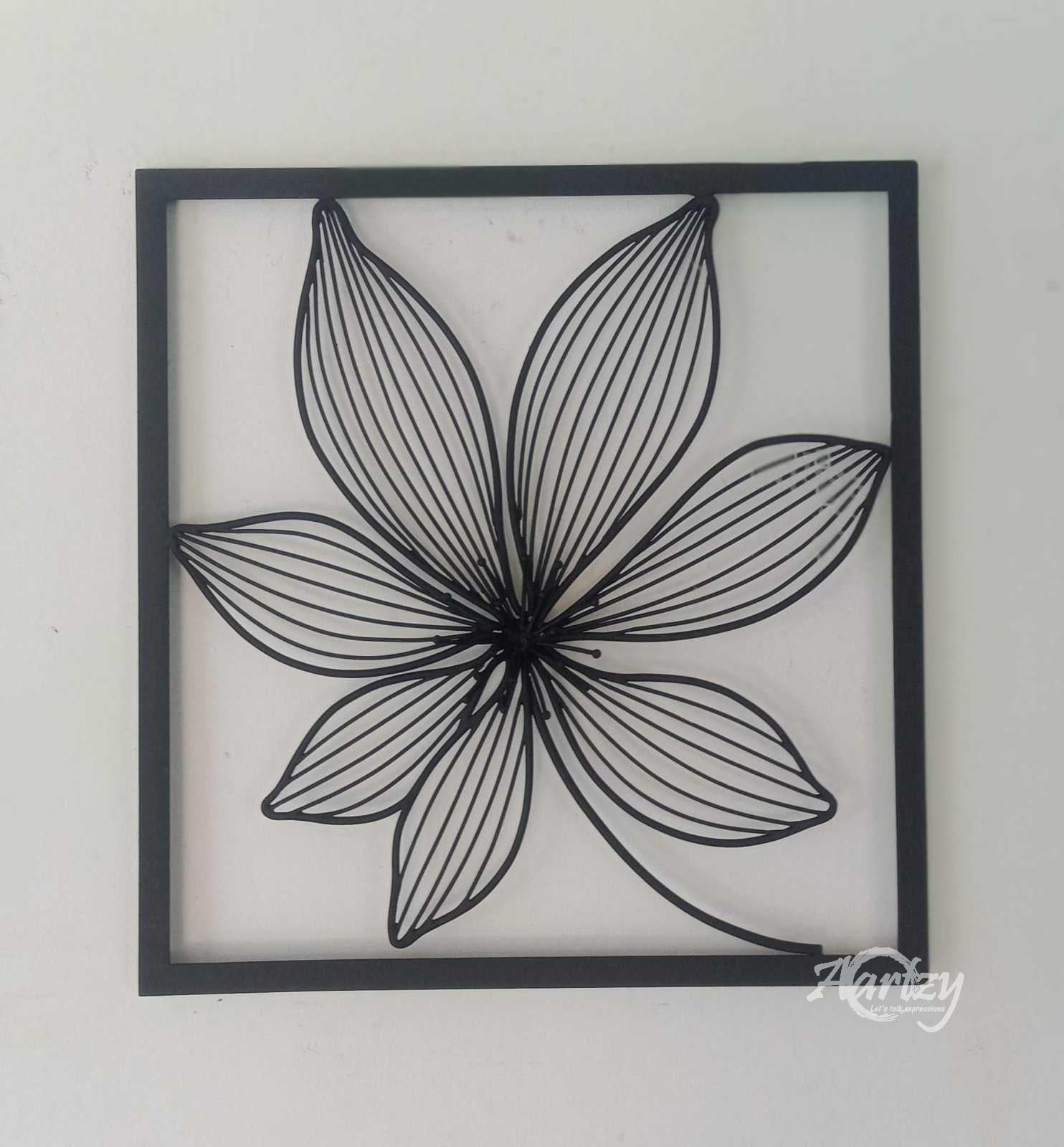
When choosing, check three things:
- Color count: Two or three dominant tones usually work best.
- Subject clarity: One clear focal subject beats a busy composition.
- Surface texture: Matte finishes and simple materials keep the room calm.
Color, Scale, and Materials That Keep a Room Calm
Color and scale determine whether traditional art feels balanced or overwhelming. Muted palettes that echo your wall color help the artwork blend in, while one contrasting accent can draw the eye deliberately.
Scale matters as much as color. A piece that is too small can look lost on a large wall. As a general guideline, hang artwork so it occupies roughly two-thirds of the width of the furniture beneath it. This keeps proportions balanced.
Materials also shape the mood. Canvas, wood and metal each bring a different tactile quality. Canvas softens a room, wood adds warmth, and metal gives a crisp, modern edge. Pick one dominant material to avoid visual clutter.
Watch out: mixing several bold, patterned pieces in one small room is the most common way minimalist spaces start to feel busy.
How to Style Traditional Art in a Minimalist Home
Styling is where most minimalist rooms succeed or fail with traditional art, because the piece itself is only half the result. The sequence below is the one most designers and collectors follow, and it works whether you are hanging a painting, a carving, or a textile.
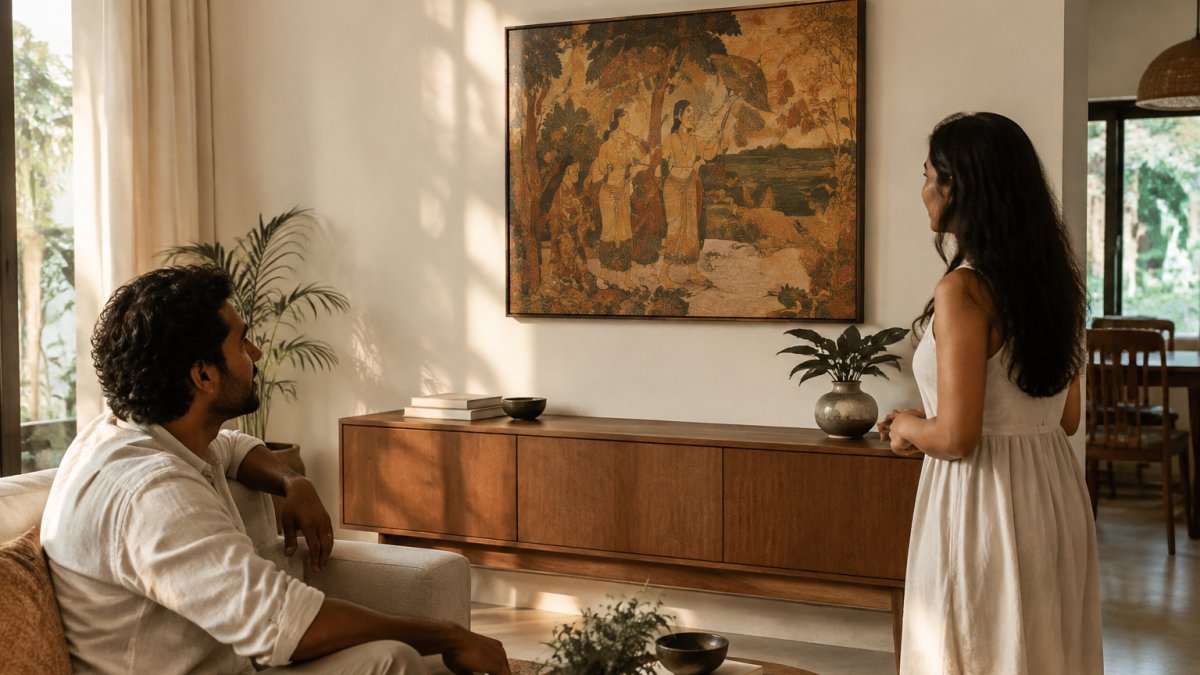
- Clear the wall first. Remove everything except the piece you plan to hang. Styling decisions made against existing clutter tend to overcorrect.
- Set the height. Center the artwork at roughly 57 to 60 inches from the floor to its midpoint, the standard gallery height that keeps the piece in the viewer's natural sightline.
- Size to the furniture, not the wall. As a working rule, artwork hung above a sofa or sideboard should span about two-thirds of the furniture's width. A piece narrower than half the furniture width usually looks stranded.
- Protect negative space. Keep at least a foot of bare wall on either side of the piece, and more above it. Crowding the frame with shelves or a gallery cluster is the fastest way to lose the calm.
- Echo one accent color. Pull a single tone from the artwork into a cushion, vase, or throw. One echo ties the room together; three or more turns the artwork into part of a color scheme.
- Live with it before adding. Give the arrangement a week before you hang anything else. Most people find the single piece is enough.
!A calm, uncluttered living room with off-white walls and a single hand-painted Sri Lankan canvas hung at eye level above a low wooden sideboard, soft natural window light
Room-by-Room Placement Examples
Living room, what works. One larger piece above a low sideboard or sofa, with simple furniture and a restrained palette around it. The artwork carries the room because nothing else is competing for the eye. What fails: a gallery wall of five small traditional pieces above the sofa. Each piece may be lovely, but together they read as pattern, and the room loses its focal point.
Bedroom, what works. A single figurative piece above the headboard in a softer tone, sized to about two-thirds of the bed width. What fails: a vivid full-color mask or densely patterned textile directly over the bed, where its color load works against rest.
Entryway, what works. A smaller monochrome piece or a single carved element on a narrow wall, creating a quiet first impression. What fails: a console crowded with a patterned textile, a mask, and a painting at once, the entry becomes a display case rather than a welcome.
Home office, what works. A single piece placed to the side of the desk rather than directly behind the monitor, so it is seen when you turn rather than stared at all day. What fails: art hung in the camera background alongside shelves and plants, which flattens the piece into decor.
Watch out: the most common failure is not the artwork itself but the second and third piece added later. Traditional art accumulates quickly, and each addition raises the room's visual density. If you want to collect, rotate pieces seasonally rather than hanging them together.
Pros and Cons of Adding Traditional Art to Minimalist Spaces
Pros:
- A single piece creates a strong, meaningful focal point.
- Culturally rich subjects add depth without adding clutter.
- Muted traditional palettes often blend with neutral minimalist schemes.
- Original work carries a personal story that mass-produced decor does not.
Cons:
- Highly patterned or vivid pieces can compete with minimalist furnishings.
- Choosing the wrong scale can make a room feel unbalanced.
- Collecting several traditional works can quickly undo the calm of a minimalist room.
- Authenticity varies, so buyers should confirm the artist and materials before purchasing.
Pricing: Original Work Versus Prints, and Where Your Purchase Goes
Original paintings and prints serve different budgets. Original hand-painted work is priced for its uniqueness, while prints offer a lower-cost way to bring similar imagery into your home. For example, the Maiden of Sigiriya original is listed at $639.99, and Beauty with Simplicity is listed at $699.99.
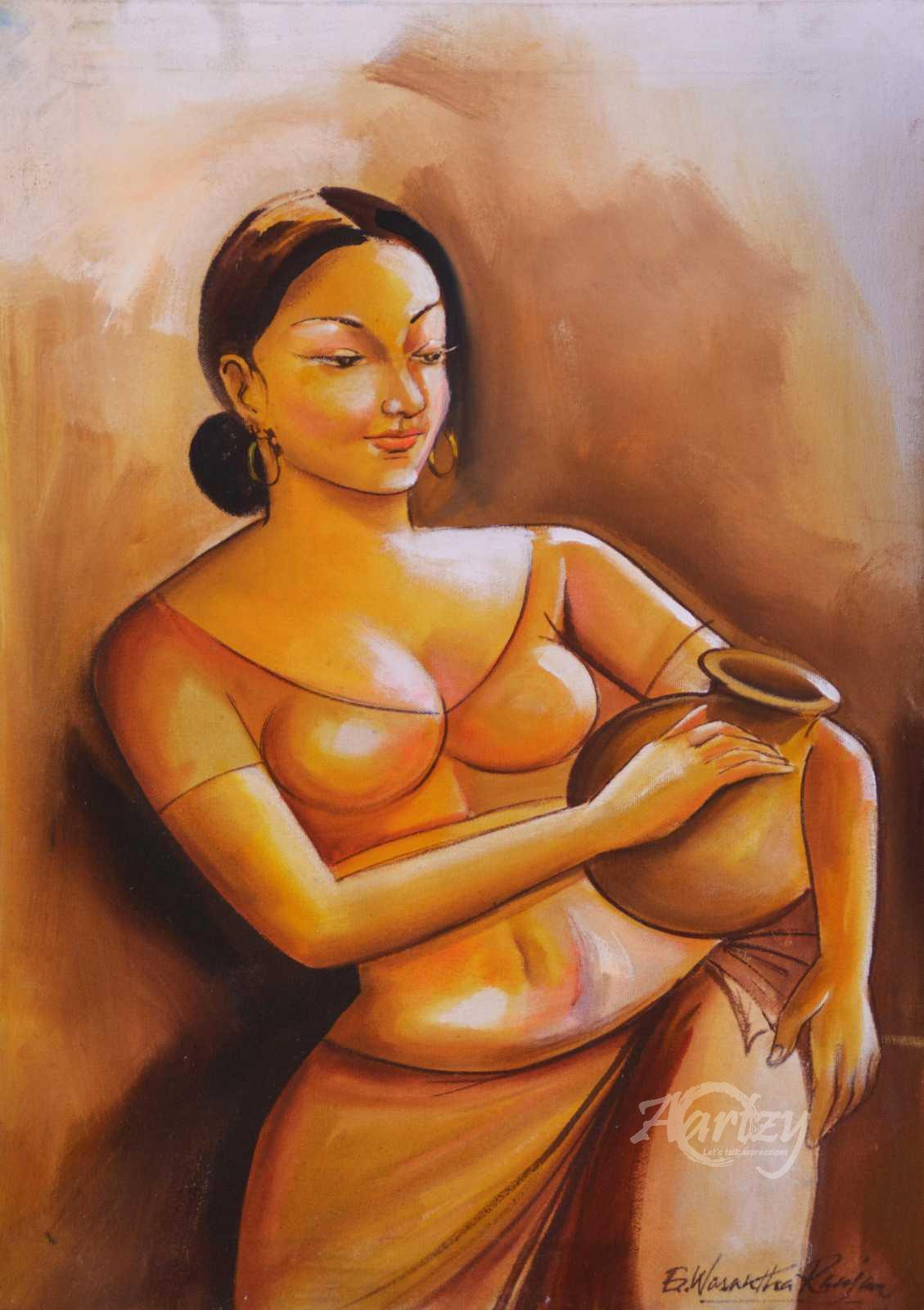
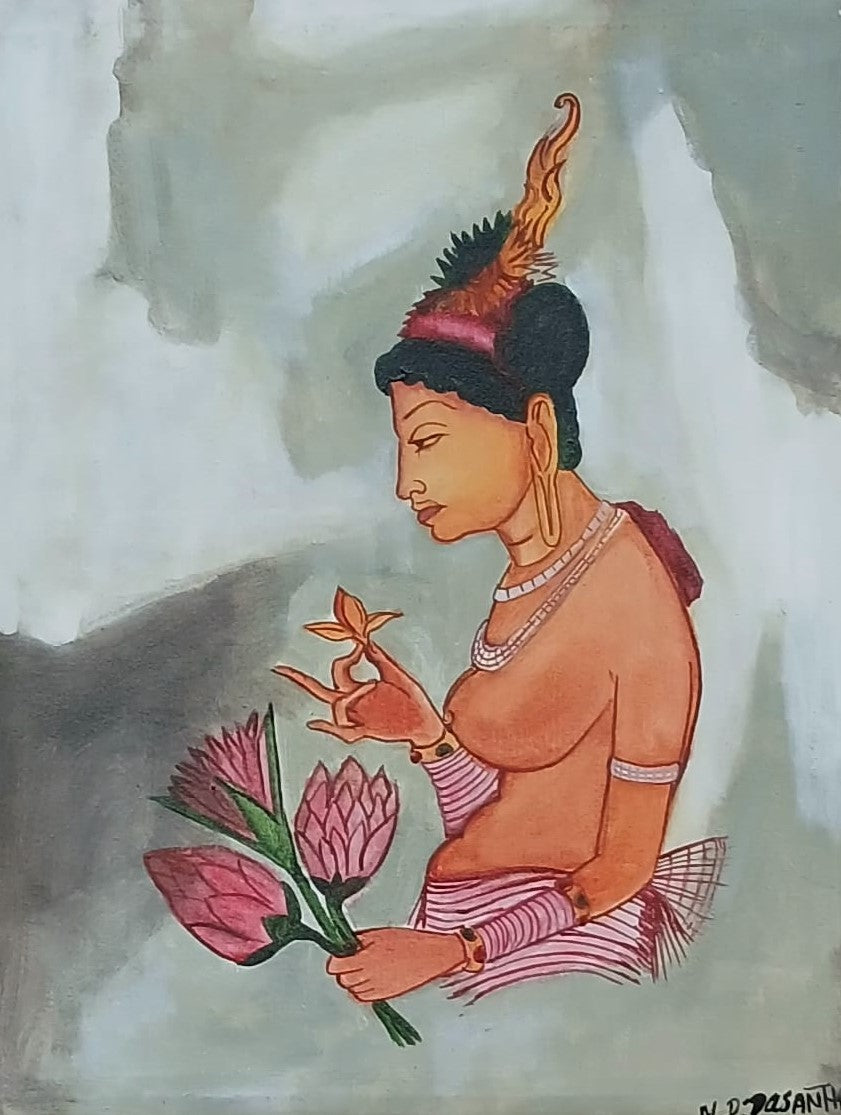
When you buy from a platform, it is reasonable to ask how much of the purchase reaches the artist. For a broader look at affordable original options, our guide to affordable original art for new collectors covers budget-friendly starting points.
The article gives these price points for original work, so readers can compare them at a glance.
| Item | Price | Note |
|---|---|---|
| Maiden of Sigiriya (original) | $639.99 | Hand-painted original |
| Beauty with Simplicity | $699.99 | Original piece |
| Originals vs. prints | Different budgets | Prints are a lower-cost option |
Choosing Your First Piece for a Calm, Considered Room
Start with one piece that speaks to you, measure your wall and check the color balance before you buy. A single well-placed work will do more for a minimalist room than several competing pieces. Browse the Maiden of Sigiriya and Monochrome Blossom to see how two very different styles fit quiet spaces.
Traditional Sri Lankan art and minimalist interiors can work together beautifully. Choose carefully, give your artwork room to breathe, and let one meaningful piece carry the room. Worldwide shipping is offered, and payment is processed securely, which makes it simple to bring one home.
Frequently Asked Questions
Can traditional art work in a minimalist home?
Yes, it can, as long as the piece is chosen and placed with restraint. Traditional Sri Lankan paintings often use strong outlines, flat areas of color and a single focal figure, which suits minimalism when the palette is limited and the surrounding walls stay largely empty. A bold, busy canvas can overwhelm a sparse room, so pick one piece with muted tones, such as Beauty with Simplicity at $699.99, and give it generous negative space around it.
How do you display traditional art without making a minimalist room feel cluttered?
Hang one significant piece rather than a grouping, and place it where it can be seen as a deliberate focal point, typically on the wall facing the main seating area. Keep the frame simple and the wall color neutral, and avoid placing other decorative objects directly beneath it. Matching the piece's color to one accent in the room, such as a cushion or a ceramic vessel, ties it in without adding visual noise.
What colors of art work best in a minimalist interior?
Works with a restricted palette, such as the monochrome Devil Masked at $809.99 or the metal Monochrome Blossom at $849.99, tend to sit most comfortably in minimalist rooms because they introduce texture and form without adding color competition. If you prefer color, choose one or two tones that already appear in your furniture or textiles, and let the rest of the room stay neutral. Matte finishes generally read as calmer than high-gloss surfaces.
How do you choose the right size artwork for a minimalist wall?
A common approach is to size the piece so it covers roughly two-thirds of the width of the furniture beneath it, which keeps the composition balanced without crowding the wall. Leave clear space around the frame rather than filling the wall edge to edge. For a single statement piece above a sofa or bed, larger works such as Maiden of Sigiriya at $639.99 usually look more intentional than several small pieces.
