
Table of Contents
- Understanding Authenticity in Art
- How to Tell if Art is Authentic
- The Role of Provenance and Documentation
- How to Value a Painting and Artwork
- Emotional Honesty and the Artist-Audience Connection
- Limitations and Risks in Authentication
- Frequently Asked Questions
Last Updated: October 13, 2026
Understanding Authenticity in Art
Authenticity in art is the quality of being original and genuine, created directly by the artist whose name it bears, using their own hand and vision, understanding what makes art authentic and valuable requires examining this foundation.
At AARTZY, we work directly with Sri Lankan artists to ensure every piece you purchase is authentic. We understand that authenticity matters to collectors and art lovers who want to support real creators, not mass-produced copies.
The foundation of authenticity rests on three pillars: the artist's original hand, the creative intent behind the work, and the documented history of the piece. When all three align, you have genuine art. When one breaks down, questions arise.
Originality Versus Reproduction
An original artwork is created directly by the artist. A reproduction is a copy made later, often by someone else. The difference is fundamental.
Original paintings carry the artist's unique touch. Each brushstroke reflects their choices. Reproductions, even high-quality ones, lack that direct creative act. They're made from existing designs, either photographs, prints, or other originals.
This distinction matters because:
- Originals hold the artist's creative energy and intention
- Reproductions are mechanical copies, no matter how skillfully made
- Market value reflects this gap significantly
- Supporting artists means buying their original work
Many collectors start by thinking originals cost too much. Then they realize: you're paying for the artist's time, skill, and unique vision. Reproductions are cheaper because they don't involve the original creative process.
At AARTZY, we feature original paintings and sculptures from Sri Lankan artists. Each piece is a one-of-a-kind creation, not a print run or mass-produced item.
Artist Intent and Creative Expression
Artist intent is the conscious choice behind what the artist creates. It shapes every element, color, composition, subject matter, technique. Without intent, there's no art. There's just decoration.
When you buy authentic art, you're buying someone's deliberate creative choices. The artist decided what to paint, how to paint it, and why it matters.
Creative expression flows from the artist's experience, emotions, and perspective. A painting about loss looks different when created by someone who lived through loss.
This is why artist background matters. Understanding where an artist comes from, what they've experienced, and what they're trying to say deepens your connection to the work.
How to Tell if Art is Authentic
Determining authenticity requires examining multiple factors. No single test proves it. Instead, you build a case by looking at materials, condition, provenance, and the artist's documented history.
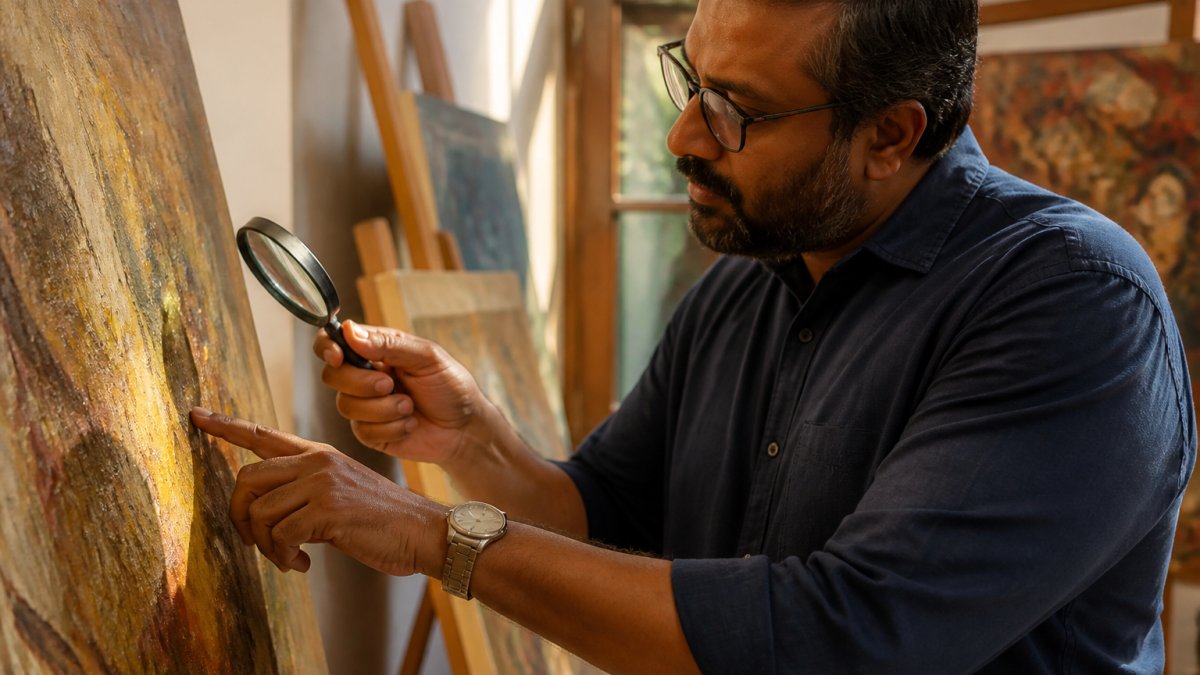
Start by asking: Does everything align? Do the materials match the claimed period and artist? Is the condition consistent with the artwork's age? Does the provenance story hold up? Does the artist's reputation support this work?
Examining Materials and Craftsmanship
The materials an artist uses tell a story. Canvas type, paint composition, brushwork technique, these reveal whether a piece is authentic or a later copy.
Original paintings show:
- Consistent brushwork that reflects the artist's hand
- Materials appropriate to the artist's known practice
- Natural aging and wear patterns
- Signature technique visible throughout
Reproductions often show:
- Uniform, mechanical brushstrokes
- Modern materials used to copy older work
- Artificially aged surfaces
- Lack of the artist's distinctive style
Craftsmanship is the execution. A skilled artist develops a recognizable technique. Their brushstrokes have rhythm and personality. Their color choices reflect their palette. Their composition shows their visual thinking.
When you examine a painting closely, you're looking for evidence of the artist's hand. Does the work show the skill level you'd expect from someone with their training and reputation? Are there moments where the artist made choices that reveal their thinking?
Assessing Condition and Preservation
Condition affects both authenticity assessment and value. A well-preserved painting shows consistent aging. A poorly preserved one may hide damage or raise questions.
Key condition factors:
- Surface cleanliness and any restoration work
- Cracks, fading, or other aging patterns
- Frame condition and age
- Evidence of previous repairs or alterations
Original paintings age predictably. Canvas yellows. Paint cracks in certain patterns. Varnish darkens. These changes follow natural laws. If a painting's condition doesn't match its claimed age, that's a red flag.
Preservation matters because it affects how you'll display and care for the work. A well-preserved painting requires less intervention. A damaged one may need professional restoration, which costs money and carries risks.
Ask about the artwork's history. Has it been restored? When? By whom? Were original materials used? Professional restorers document their work. If no documentation exists, that's worth noting.
The Role of Provenance and Documentation
Provenance is the documented ownership history of an artwork. It answers: Where did this come from? Who owned it before? How did it move through the world?
Strong provenance builds authenticity. It creates a chain of evidence. Each owner adds a link. Gallery records, auction house documentation, artist records, these all strengthen the chain.
Weak provenance raises questions. If an artwork suddenly appears with no history, where was it? Why does no one know about it? Authentic works usually have some documented trail.
Documentation includes:
- Artist signatures and dates
- Gallery or exhibition records
- Previous owner information
- Auction or sale records
- Artist statements or catalogs
This documentation should be verifiable. You should be able to trace claims back to reliable sources. A gallery should have records. An auction house should have catalogs. The artist's estate should have documentation.
Art Certificate of Authenticity
A certificate of authenticity is an official document stating that an artwork is genuine. It includes details about the piece: artist, title, date, materials, dimensions, and sometimes provenance information.
A genuine certificate should include:
- Artist's name and signature
- Artwork title and creation date
- Physical dimensions and materials
- A unique certificate number
- Issuer name and credentials
- Date of certificate issuance
Certificates carry weight when issued by:
- The artist directly
- Established galleries or dealers
- Recognized auction houses
- Artist estates or foundations
- Museums with authentication expertise
However, a certificate alone doesn't guarantee authenticity. It's one piece of evidence. You still need to verify the issuer's credibility. A certificate from an unknown source means little. A certificate from a respected gallery or the artist themselves carries real weight.
At AARTZY, we provide documentation for every artist we feature. Our artists are verified creators with documented practice and exhibition history. When you purchase from AARTZY, you're buying directly from the source, the artist or our curated gallery, which eliminates many authenticity questions entirely.
How to Value a Painting and Artwork
Value in art comes from multiple sources. Market demand matters. But so does cultural significance, artist reputation, condition, and your personal connection to the work.
Market value is what collectors will pay. It fluctuates based on trends, artist popularity, and supply.
Intrinsic value comes from the work itself. How well is it made? Does it communicate something meaningful? Does it show skill and vision? These qualities exist regardless of market trends.
Personal value is what the work means to you. If a painting makes you feel something, if it fits your space and speaks to your taste, that's real value. Don't dismiss it.
Artist Reputation and Career Trajectory
An artist's reputation affects their work's value. Established artists command higher prices. Emerging artists cost less but may appreciate faster if they gain recognition.
Look at:
- Years of professional practice
- Exhibition history and venues
- Critical recognition or awards
- Collector demand
- Price history over time
A 30-year career shows staying power. An artist who's shown in respected galleries has credibility. Awards and critical recognition validate skill. Collector demand shows the market values their work.
Emerging artists often offer better value for collectors. You pay less upfront. If they gain recognition, your investment appreciates. The risk is higher, but so is the potential return.
At AARTZY, we feature both established and emerging Sri Lankan artists. We verify their credentials and exhibition history. You know who you're buying from and what their background is.
Cultural Significance and Historical Context
Artworks gain meaning from their cultural and historical moment. A painting created during a significant period in the artist's culture carries weight beyond its technical qualities.
Sri Lankan art, for example, reflects the island's rich history, spiritual traditions, and contemporary identity. Understanding that context deepens your appreciation and understanding of the work.
Consider:
- The artist's cultural background and influences
- Historical moment of creation
- Themes and symbols used
- Relevance to broader artistic movements
- Connection to the artist's community
Culturally significant work often appreciates over time. Collectors recognize its importance. Museums seek it out. The art world validates its place in history.
When you buy from AARTZY, you're connecting with Sri Lankan culture and supporting artists who carry that tradition forward. That cultural significance adds value beyond the visual appeal.
Emotional Honesty and the Artist-Audience Connection
The strongest art creates connection. It speaks to something true in the viewer's experience. That emotional honesty is what transforms a technically skilled painting into meaningful art.
Authentic art doesn't pretend. It doesn't manipulate. It communicates genuine feeling or vision. You sense it immediately. The work feels true.
This is why artist intent matters so much. When an artist creates from genuine experience or belief, that authenticity comes through.
The artist-audience connection is a two-way street. The artist creates with honesty. You receive that honesty and respond. That exchange is what makes art matter.
Look for work that speaks to you. Not because it's trendy or valuable, but because it says something you recognize as true.
Limitations and Risks in Authentication
Authentication isn't perfect. Even experts disagree sometimes. Documents can be forged. Condition can hide flaws. Provenance can have gaps.
Common authentication challenges:
- Forged signatures or documents
- Altered or repainted sections
- Missing provenance records
- Attribution disputes among experts
- Modern fakes using period-appropriate materials
No single test proves authenticity absolutely. Professional authenticators use multiple approaches: material analysis, stylistic examination, provenance research, expert opinion. Even then, edge cases exist.
Be aware of these risks when buying:
- Authenticate high-value purchases with professionals
- Ask for documentation and verify it independently
- Buy from reputable sources with track records
- Understand that "as represented" doesn't guarantee authenticity
- Consider insurance for valuable pieces
When you buy from AARTZY, you're reducing these risks significantly. You're buying directly from verified artists or through our curated gallery. You have documentation. You have a relationship with the source. That transparency eliminates many common authentication problems.
Understanding what makes art authentic and valuable comes down to truth. Real art comes from real artists. It reflects genuine creative choice and skill. It carries documented history.
At AARTZY, we make this simple. Explore our collection of authentic Sri Lankan paintings and sculptures, and bring genuine artistic vision into your space with The Strongest Bind or Floating Pink Water Lilies, pieces that combine technical mastery with emotional honesty.


Frequently Asked Questions
How do I know if a piece of art is authentic?
Authentic art exhibits original brushwork, consistent materials, and verifiable provenance. Examine the signature, materials, and condition. Request documentation of the artist's identity and exhibition history. A genuine art certificate of authenticity from the artist or gallery provides additional verification. Look for evidence of the artist's unique technique and creative expression rather than mass-production markers like repetitive patterns or industrial finishes.
What is an art certificate of authenticity?
A certificate of authenticity is an official document issued by the artist, gallery, or authenticated third party confirming that an artwork is original and created by the stated artist. It typically includes the artist's signature, the title and date of the work, dimensions, materials used, and sometimes exhibition history. This documentation is crucial for collectors, providing proof of ownership and integrity. Reputable galleries like Aartzy provide certificates with each original piece, establishing the artwork's legitimacy and supporting its market value.
What factors determine how to value a painting?
Several factors influence a painting's value: the artist's reputation and professional recognition, the work's originality and condition, its cultural significance and historical context, provenance and ownership history, and emotional impact or artistic integrity. Market demand, rarity, and the artist's career trajectory also matter. A piece like 'Floating Pink Water Lilies' gains value through its meticulous brushwork, traditional artistic approach, and the artist's demonstrated skill in capturing serene detail. Personal connection and cultural resonance add non-monetary value for collectors.
Why is provenance important when buying art?
Provenance, the documented ownership history of an artwork, establishes authenticity, legitimacy, and value. It protects you from purchasing stolen, counterfeit, or misattributed pieces. A clear ownership chain demonstrates that the work is genuine and legally owned. When buying from established platforms like Aartzy, you receive verified artist information and exhibition records, ensuring the piece's integrity. Strong provenance increases resale value and gives collectors confidence in their investment, making it one of the most critical factors in evaluating any artwork.