
Table of Contents
- Prepare Your Sculpture for International Shipment
- How to Pack a Sculpture for Shipping
- Selecting a Sculpture Shipping Crate
- How Much Does It Cost to Ship a Sculpture
- Shipping Fragile Items Internationally
- Customs Paperwork and Insurance for International Shipments
- Validation and Drop Testing Before Shipment
- Frequently Asked Questions
Last Updated: October 18, 2026
Prepare Your Sculpture for International Shipment
When you ship fragile sculptures internationally, careful planning before your piece ever touches packing material is essential. Most damage happens because people skip this step.
Start by cleaning your sculpture thoroughly. Use soft brushes and mild solutions appropriate for the material. Dust and debris trapped under padding can scratch surfaces during transit.
Next, identify any detachable components. Removable arms, legs, bases, or decorative elements should come off before packing. Secure attachments are vulnerable during the vibration and movement of international shipping.
Clean and document the piece
Remove all dust and surface debris before packing begins. Use appropriate cleaning methods for your sculpture's material. Ceramic pieces need different care than wooden sculptures or glass artwork. Document the sculpture's condition with dated photographs showing all sides and any existing marks or imperfections.
Remove detachable components and attachments
Identify every removable element. Test gently to confirm what can safely come apart. Label each component clearly so reassembly is straightforward. Wrap detachable pieces individually in acid-free paper before placing them in protective boxes. This prevents components from shifting against each other during transit.
How to Pack a Sculpture for Shipping
Proper packing transforms how you ship fragile sculptures into protected artwork ready for international travel. The goal is creating multiple layers of protection between your piece and the outside world.
Start with acid-free paper or tissue. This material won't damage your sculpture's surface over time.
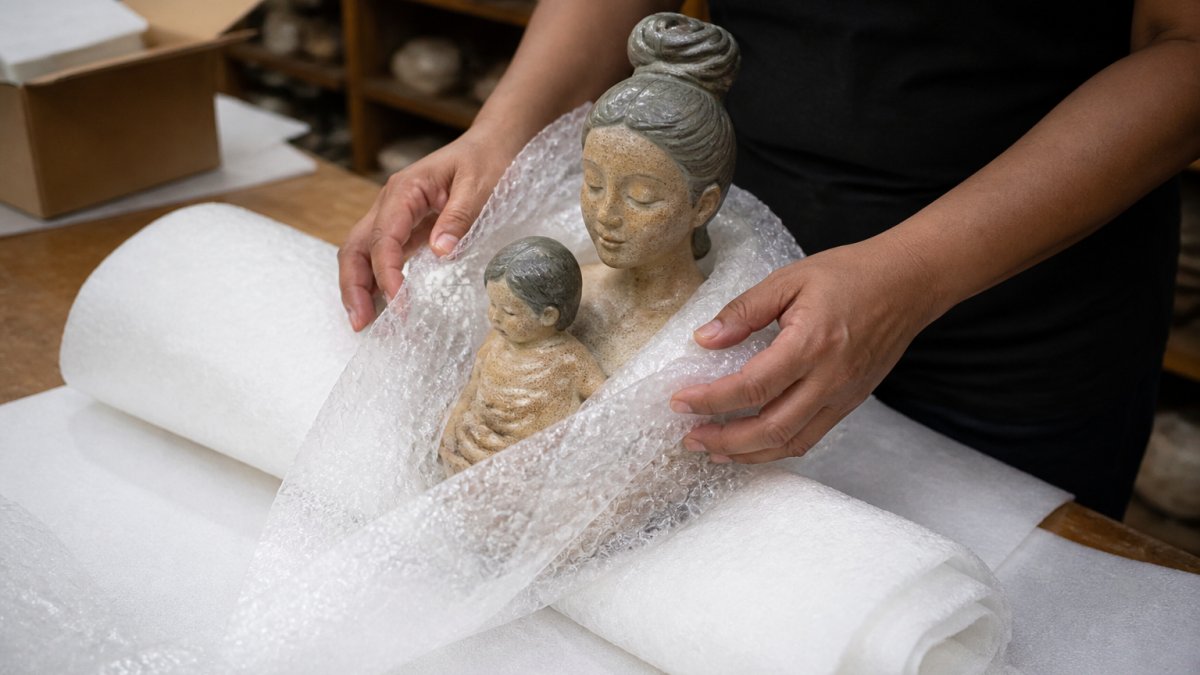
Wrap with protective layers
Begin wrapping with acid-free paper or tissue. Work methodically from one end to the other. Secure the paper with painter's tape, which won't leave residue. This first layer prevents direct contact between your sculpture and cushioning materials.
Add a second protective layer using soft cloth or additional tissue. This dual-layer approach provides backup protection if the outer layer tears during handling. Pay extra attention to vulnerable areas like protruding limbs, carved details, or thin sections that could break easily.
Use bubble wrap and foam inserts
Bubble wrap creates essential cushioning against impacts and vibration. Wrap the protected sculpture in bubble wrap with the bubbles facing inward. Use at least two layers for most sculptures. For particularly fragile pieces, three layers offer better protection during international transit.
Foam inserts work alongside bubble wrap. Cut custom foam pieces to fit around your sculpture's unique shape. Foam absorbs shock better than bubble wrap alone and prevents the sculpture from shifting inside its box. Combine both materials for maximum protection.
Secure delicate details and fragile components
Identify the most vulnerable areas of your sculpture. Thin necks, protruding arms, or delicate facial features need extra protection. Wrap these sections individually with additional padding before the overall wrapping process. This targeted approach prevents damage to the elements most likely to break.
Use foam blocks or custom foam inserts to immobilize these details. The goal is preventing any movement or contact between fragile parts and the box walls. Test the wrapping by gently moving the package. You shouldn't hear or feel the sculpture shifting inside.
Selecting a Sculpture Shipping Crate
The container you choose determines whether your sculpture arrives safely or damaged. This decision affects both protection and cost. Understanding your options helps you make the right choice for your specific piece.
Corrugated boxes work well for smaller sculptures under 20 pounds. They're affordable, lightweight, and suitable for most standard sizes. Custom wooden crates become necessary for larger pieces, valuable artwork, or sculptures with irregular shapes. Professional crating adds cost but provides superior protection for high-value international shipments.
Corrugated box vs. custom wooden crate
Corrugated boxes offer economy and sufficient protection for many sculptures. They're easy to source, lightweight for shipping, and recyclable. Choose boxes with walls at least 1/4 inch thick. Double-wall construction provides better protection than single-wall boxes.
Wooden crates justify their higher cost when shipping valuable pieces or oversized sculptures. Custom wooden crates can be built to your sculpture's exact dimensions. They provide superior protection against crushing, impacts, and rough handling during international transport. Professional crating also impresses recipients and signals that the artwork inside is valuable.
Creating cushioning clearance and void fill
Space between your wrapped sculpture and the box walls is critical. Aim for at least 2-3 inches of clearance on all sides. This void space absorbs impacts and prevents the sculpture from contacting the box during transit.
Fill this void space completely with cushioning material. Options include foam peanuts, crumpled acid-free paper, or custom foam blocks. Avoid newspaper or recycled materials that can shift and compress. The void fill should be dense enough that the sculpture cannot move when you shake the box gently.
Double boxing for oversized artwork
Oversized sculptures benefit from double boxing. Place your wrapped sculpture in an inner box surrounded by cushioning. Then place that inner box inside a larger outer box with additional padding between the two. This approach provides multiple layers of protection and prevents damage from punctures or crushing.
Double boxing costs more but significantly reduces damage risk for international shipments. The inner box absorbs the first impact. The outer box provides backup protection. This method is standard practice for valuable fine art and sculptures worth thousands of dollars.
How Much Does It Cost to Ship a Sculpture
Shipping costs depend on weight, size, distance, and protection level. Understanding these factors helps you budget accurately and choose appropriate shipping methods.
International shipping for sculptures typically ranges from a few hundred to several thousand dollars depending on the piece. A small ceramic sculpture might cost $200-400 to ship internationally. Larger wooden sculptures or oversized pieces can easily exceed $1,000. Valuable fine art pieces often cost $2,000-5,000 or more for professional packing and specialized shipping services.
Factors that affect shipping costs
Weight is the primary cost driver. Heavier sculptures cost more to transport. A 50-pound sculpture costs substantially more than a 10-pound piece to the same destination.
Dimensions matter equally. Oversized pieces require larger boxes or custom crates, increasing costs. Fragile materials demand more cushioning and sometimes professional packing services. International destination affects cost significantly.
Shipping method determines price substantially. Standard international shipping is affordable but slower. Expedited services cost more but deliver faster. Specialty fine art shipping services provide white-glove handling and insurance but charge premium prices.
Professional packing vs. self-packing
Professional packing services cost $100-500 depending on sculpture complexity. They handle all wrapping, cushioning, and boxing.
Self-packing saves money but requires care and proper materials. You'll spend $30-100 on quality packing supplies. The time investment is significant for complex sculptures.
At AARTZY, we handle professional packing and secure international shipping for all our sculptures. Pieces like our Flying Fire Machine wooden dragon sculpture are carefully prepared for safe transit to collectors worldwide.

Shipping Fragile Items Internationally
International shipping introduces complexities beyond domestic transport. Your sculpture crosses borders, passes through multiple handling points, and experiences varying temperature and humidity conditions during transit.
Choose carriers experienced with fine art. Major international carriers offer specialized art shipping services. These services provide tracking, insurance, and careful handling. Smaller carriers may be cheaper but offer less protection and fewer insurance options.
Choosing the right carrier and service
Research carriers that specialize in fine art and antiques. These companies understand sculpture shipping and provide appropriate handling. They offer insurance options and tracking throughout transit.
Compare service levels carefully. Standard international shipping is affordable but offers minimal protection. Expedited services cost more but reduce transit time and exposure to damage.
Verify insurance coverage before shipping. Standard shipping insurance often doesn't cover fine art adequately. Fine art shippers typically offer specialized insurance that covers full replacement value. Confirm coverage limits match your sculpture's actual value.
Temperature, humidity, and transit duration risks
Long international voyages expose sculptures to temperature and humidity fluctuations. Ceramic and glass pieces can crack if exposed to extreme temperature swings.
Choose shipping routes and methods that minimize transit duration. Direct routes are preferable to those with multiple transfers. Expedited services reduce time in transit and exposure to environmental stress.
Document environmental conditions during transit if possible. Some fine art shippers track temperature and humidity throughout the journey. This documentation protects you if damage occurs and supports insurance claims.
Customs Paperwork and Insurance for International Shipments
International shipping requires customs documentation and proper insurance. These elements protect both you and the recipient while ensuring legal compliance.
Customs officials need clear documentation about your sculpture's contents, value, and origin. Incomplete paperwork delays shipments and creates complications. Proper insurance protects your financial investment if damage or loss occurs during transit.
Required customs documentation and duties
Complete customs forms accurately and thoroughly. Describe your sculpture clearly, including material, dimensions, and weight. Declare the full value honestly. Undervaluing artwork creates legal problems and voids insurance coverage.
Provide certificates of authenticity or artist information if available. This documentation helps customs officials process shipments faster. Include artist name, country of origin, and any relevant provenance information.
Duties and taxes vary by destination country. Some countries impose import duties on fine art. Others have duty-free status for original artwork. Research your specific destination's customs requirements before shipping.
Declared value and claims documentation
Declare the full replacement value on all customs and insurance forms. This value should reflect what you'd pay to replace the sculpture if it arrived damaged.
Keep detailed records of the sculpture's value. Photographs, appraisals, and purchase documentation support claims if needed. Include these documents with your shipment or provide them to the shipping company.
Insurance claims require proof of damage and proof of value. Photographs taken before packing are essential. If damage occurs, document it thoroughly with new photographs before unpacking.
Validation and Drop Testing Before Shipment
Professional shippers sometimes perform drop tests or vibration testing before international shipment. This validation confirms your packing protects the sculpture through realistic handling scenarios.
Drop testing involves carefully dropping a packaged sculpture from low heights to simulate rough handling. Vibration testing subjects the package to movement patterns similar to truck or air transport.
Consider performing a simple shake test yourself. Gently shake the packed box in all directions. You shouldn't hear or feel the sculpture moving inside. If movement is detectable, add more cushioning and void fill before shipping.
Shipping fragile sculptures internationally successfully requires planning, proper materials, and careful execution. When you purchase sculptures like our Amazing Creations metal sculpture or The Jump wooden horse piece, we handle professional packing and secure worldwide shipping so your artwork arrives safely.


Frequently Asked Questions
How do you ship fragile sculptures internationally without damage?
Ship fragile sculptures by wrapping them in acid-free paper and bubble wrap, securing all delicate details and attachments separately. Use a sturdy corrugated box or custom wooden crate with at least 3 inches of foam inserts or cushioning material on all sides. For oversized or high-value pieces, double boxing provides extra protection. Choose a carrier experienced with fine art, track the shipment, and purchase insurance based on the declared value. Many galleries, including AARTZY, offer professionally packaged and crated shipping to protect sculptures during transit.
What should be included in customs paperwork for sculpture shipments?
International sculpture shipments require a commercial invoice listing the item description, material (ceramic, glass, wood, metal), weight, dimensions, and declared value in USD. You'll also need a packing list and may need a Certificate of Origin depending on the destination country. The recipient should expect duty assessments based on the declared value and their country's tariff rates. Keep copies of all documentation for insurance claims if damage occurs during transit.
How much does it cost to ship a sculpture internationally?
Shipping costs depend on weight, dimensions, destination, and service level. A sculpture like AARTZY's Amazing Creations ($2,229.99) or Flying Fire Machine ($1,779.99) includes worldwide shipping with professional packaging and tracking, making it a secure option for valuable pieces. Express services and additional insurance may increase costs further.
Should sculptures be shipped in wooden crates or corrugated boxes?
Wooden crates are best for large, valuable, or oversized sculptures because they provide superior protection against impact and vibration. Corrugated boxes work for smaller, lighter pieces under $500. Wooden crates prevent damage during rough handling and long-distance transit. For fine art sculptures like those from AARTZY, professional wooden crates with custom foam inserts are recommended to ensure the piece arrives in perfect condition and to support insurance claims if damage occurs.