
Table of Contents
- Assess Your Painting Before Packing
- Gather the Best Packaging Materials for Shipping Artwork
- How to Pack a Painting for Shipping
- How to Ship Framed Artwork
- How to Ship Large Paintings
- Select a Shipping Box and Double-Box Your Painting
- Insure Your Artwork and Choose a Carrier
- Common Mistakes to Avoid When Shipping Original Paintings
- Frequently Asked Questions
Last Updated: October 10, 2026
Assess Your Painting Before Packing
Before packing, evaluate your painting's condition: paint cure status, canvas type (stretched or unstretched), and whether it's framed. These factors determine your protection strategy.
Determining Paint Cure Status
Fresh paint is the most common cause of preventable shipping damage. Knowing your painting's cure status prevents surface marks, adhesion, and bloom (cloudy haze from trapped moisture).
Oil paint requires 6-12 months for full cure. Dark colors and thick impasto cure slower than thin glazes. Test by pressing your fingernail gently into an inconspicuous area, if it leaves a mark, the paint is not fully cured.
Acrylic paint cures within 24-48 hours at room temperature, though thick applications take longer. Acrylics remain water-soluble until fully dry, so moisture exposure can reactivate the surface.
Watercolor and gouache dry in 2-4 hours but can reactivate if exposed to high humidity during shipping.
Varnish and glazes require at least two weeks before packing. Fresh varnish traps moisture and causes adhesion problems or bloom. Test a hidden corner, if sticky, wait longer.
Assessing Surface Vulnerability
Evaluate surface texture and fragility. Heavily textured or impasto work can be scraped or dented. Delicate surfaces like charcoal or pastel need non-contact protection.
Check the support material. Stretched canvas warps with temperature swings or humidity. Unstretched canvas needs protection from creasing. Panel paintings can crack under impact.
Documenting Pre-Shipment Condition
Take high-resolution photos from multiple angles before packing: front, back, sides, and details. Include a photo of the wrapped package. These images are essential proof of condition for damage claims.
For high-value work, write a condition report noting existing damage, repairs, or fragile areas.
Measuring and Planning
Measure your painting now: height × width × depth, including frame if applicable. These measurements help you select the right box size and calculate shipping costs.
Gather the Best Packaging Materials for Shipping Artwork
Quality materials prevent damage. You don't need expensive specialty supplies, but you need the right ones.
Use acid-free materials to protect the painted surface and canvas. Glassine paper is thin, non-abrasive, and won't stick to paint.
Bubble wrap can stick to wet paint; use it only on the back or between layers. Foam padding is gentler for direct contact with the painted side.
For framed paintings, you'll also need:
- Kraft paper or brown wrapping paper for the frame exterior
- Foam corner protectors to guard against impact
- Packing tape that won't damage the frame finish
Use corrugated cardboard, foam board, or plywood for structure. Avoid newspaper or unprotected cardboard that transfers ink or dust.
How to Pack a Painting for Shipping
Packing follows a logical sequence: protect the surface, cushion the piece, guard the edges, and secure everything in a box.
Protecting the Painted Surface
The painted surface is most vulnerable. Lay the painting face-up on a clean surface. Remove dust gently with a soft brush; never wipe.
For unframed paintings, place glassine paper over the painted side to create a non-stick barrier. Cut it slightly larger than the canvas.
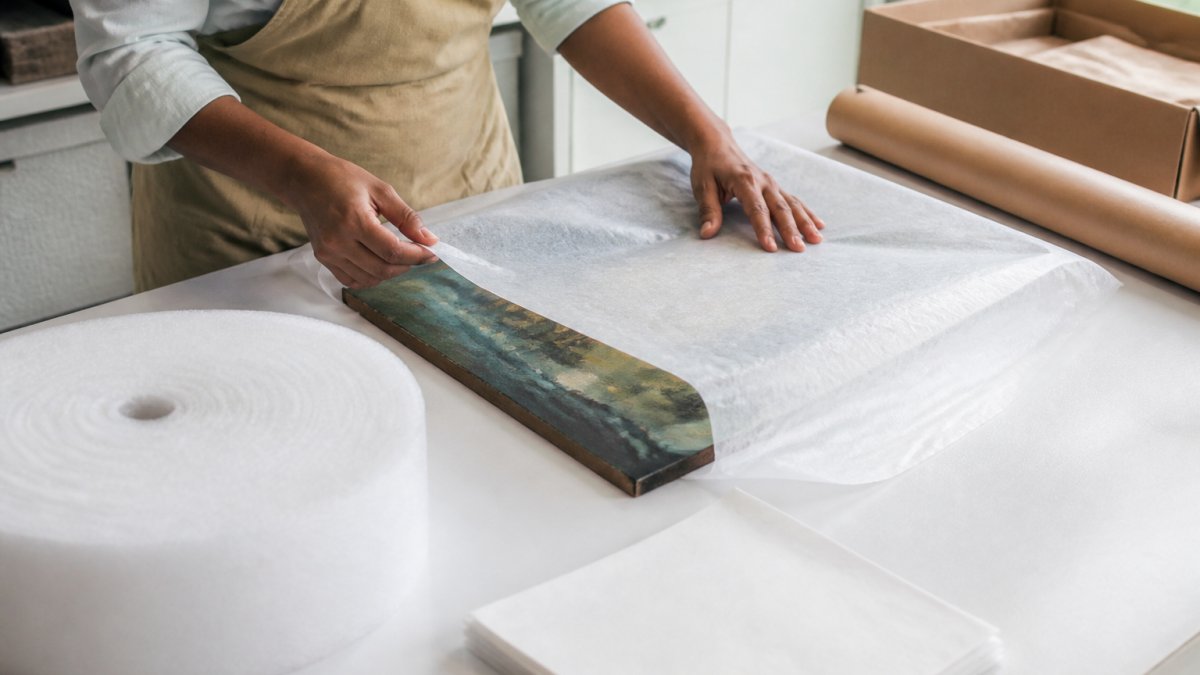
For framed paintings, cover the glass or acrylic with kraft paper taped at the back to prevent scratching if the frame shifts.
Wrapping and Cushioning the Artwork
Add cushioning layers. For unframed paintings, wrap bubble wrap around the canvas edges with painter's tape, bubble side facing outward.
Foam padding works better for high-value pieces. Layer at least two inches of cushioning on all sides.
For framed paintings, wrap in kraft paper, then add bubble wrap or foam padding. Secure with painter's tape, never regular packing tape.
Protecting Corners and Edges
Use foam corner protectors on all four corners of framed artwork. For unframed paintings, cut custom corner guards from foam board and secure with archival tape.
For large unframed paintings, tape foam strips along exposed stretcher bars to prevent dents and punctures.
How to Ship Framed Artwork
Framed paintings need different packing because the frame adds weight and creates rigid edges that can damage other items or break if dropped.
Wrap the frame in kraft paper, add foam padding focusing on corners and edges, and secure with painter's tape.
Place the framed painting in a box with at least four inches of void fill on all sides. The frame should not touch the box walls.
How to Ship Large Paintings
Large paintings over 48 inches require special handling: crating or custom boxing.
For paintings under 60 inches, use oversized heavy-duty boxes at least six inches larger on all sides. Fill all void space with cushioning.
For very large paintings, build a wooden crate with the painting secured inside using foam padding and straps.
Calculate total package weight before shipping. Large paintings often trigger dimensional weight pricing based on size rather than actual weight.
Select a Shipping Box and Double-Box Your Painting
A single box is rarely enough protection for valuable artwork.
Select double-wall corrugated cardboard boxes. The box should be at least four inches larger than your wrapped painting on all sides, six inches for high-value pieces.
Double-box by placing your wrapped painting in the first box with cushioning filling all gaps, then place this sealed box inside a larger outer box with four to six inches of cushioning between them.
The space between boxes acts as a shock absorber. This method is standard for how to ship original paintings safely.
Insure Your Artwork and Choose a Carrier
Never ship valuable artwork without declared value coverage. Document your shipment carefully to file claims if damage occurs.
Selecting Declared Value Coverage
Declared value coverage tells the carrier what the artwork is worth and determines reimbursement if damage occurs. Costs typically run 1-3% of declared value.
Declare accurate value. Undervaluing backfires if damage occurs; carriers only reimburse the undervalued amount. Overvaluing triggers investigations and appraisal requirements.
Use fair market value rather than replacement cost or sentimental value. Obtain a professional appraisal if unsure.
Comparing Carrier Options
USPS Priority Mail Express offers insurance up to $5,000 for artwork under 70 pounds. It's affordable but slower than alternatives.
UPS and FedEx offer declared value coverage and tracking. Ground services are cheaper but slower; overnight services are faster but costly. Both charge dimensional weight fees on oversized packages.
Specialty art shippers offer white-glove service, climate-controlled transport, comprehensive insurance, and expertise in fragile work. Cost is $200-500+ per painting but justified for museum-quality or extremely valuable pieces. They handle international shipments and customs documentation.
For international shipments, declare accurate value on customs forms. Undervaluing creates delays and inspections. Use a customs broker or specialty shipper for destinations outside the United States.
Pre-Shipment Documentation Checklist
Before handing your package to a carrier, create a documentation package:
- Condition photos: High-resolution images from multiple angles, taken before packing.
- Packaging photos: Images showing how the painting was wrapped and boxed.
- Packing list: Written description of materials used.
- Appraisal: For paintings over $1,000, include professional appraisal.
- Carrier receipt and tracking number: Keep all proof of shipment.
- Insurance certificate: Request copy of declared value coverage.
Store these documents digitally and in hard copy. If damage occurs, you'll need them to file a claim quickly.
Filing a Damage Claim
If your painting arrives damaged, act immediately. Do not discard the packaging or open the box fully, carriers need to inspect the damage and packaging to assess liability.
Step 1: Document the damage. Take clear photos of the damaged painting and the opened package, showing how it was packed and where damage occurred.
Step 2: Contact the carrier within 24 hours. Most carriers require claims to be filed within 30 days of delivery, but reporting immediately creates a record and triggers an inspection.
Step 3: Request a carrier inspection. The carrier will send an inspector to examine the painting and packaging.
Step 4: Submit the claim with supporting documentation. Include the condition photos taken before shipping, packaging photos, the packing list, the appraisal, and the carrier's inspection report.
Step 5: Follow up. Carriers typically respond to claims within 30-60 days. If your claim is denied, you can appeal with additional evidence or escalate to a supervisor.
International Shipping and Customs
For shipments outside the United States, customs declarations and export regulations add complexity. Declare the artwork's fair market value on the customs form (HS code 9706.00 for original paintings). Undervaluing delays clearance and triggers inspections. Overvaluing can result in unexpected duties charged to the recipient.
Some countries restrict the export of cultural property or require export permits for original artwork. Research destination country regulations before shipping. A specialty art shipper can handle customs documentation and ensure compliance with import/export rules.
International insurance costs more (typically 2-5% of declared value) and claims take longer to process. Budget extra time and cost for international shipments.
Common Mistakes to Avoid When Shipping Original Paintings
Knowing what not to do prevents most shipping damage. These mistakes appear repeatedly in damaged-art claims.
Don't use newspaper or unprotected cardboard directly against the painted surface. Ink transfers and dust particles stick to the paint permanently. Always use acid-free materials as the first layer of protection.
Don't skip the double-box method for valuable work. The extra cost of a second box is tiny compared to the cost of replacing a damaged original painting when you ship original paintings.
Don't underestimate weight and size. Oversized packages trigger dimensional weight charges that can double your shipping cost. Measure carefully and call the carrier for a quote before packing.
Don't forget to photograph the artwork before shipping. These images document condition and are essential if you need to file an insurance claim.
Shipping an original painting safely requires planning, quality materials, and the right carrier. Follow these steps, use archival-quality materials, insure your work, and your original painting will arrive exactly as it left.
Frequently Asked Questions
What materials do you need to ship a painting safely?
You'll need glassine paper or acid-free tissue to protect the painted surface, bubble wrap or foam padding for cushioning, corner protectors, rigid board or cardboard for structure, packing tape, and a sturdy shipping box. For valuable original paintings, archival materials prevent chemical damage. Double-boxing with void fill (kraft paper or foam peanuts) adds extra protection against impact during transit. Consider moisture barriers for long-distance or international shipments.
How do you protect a painting's surface during shipping?
Start by laying glassine paper directly over the painted surface, this acid-free material prevents the paint from sticking to outer layers. For fresh or delicate paint, use tissue paper first, then glassine. Wrap the entire canvas in bubble wrap or foam padding, securing it gently with tape. Avoid plastic sheeting that traps moisture. For framed paintings, cover the glass or acrylic with protective film before wrapping. The goal is a buffer between the artwork and any external pressure or abrasion during handling and transit.
Should you remove a painting from its frame before shipping?
Unframed paintings are generally easier and safer to ship because they're lighter, more compact, and less likely to have the frame damaged. However, if the frame is part of the artwork's presentation or if it's professionally installed, shipping in the frame is acceptable, just add extra corner protectors and padding. For valuable framed paintings, consider removing the frame only if you're confident in your ability to reinstall it. Always use rigid board backing for framed pieces to prevent flexing during transit.
What's the best way to ship a large or oversized painting?
Large paintings benefit from crating or rigid board reinforcement on all sides. Use foam padding or bubble wrap for cushioning, then place the wrapped artwork between two pieces of rigid board cut slightly larger than the painting. Secure with packing tape. Double-boxing is essential: the inner box holds the padded artwork, the outer box provides additional shock absorption with void fill. For very large pieces, consider specialist art transport services. Declare the full value and purchase shipping insurance based on the artwork's replacement cost.