
Last Updated: October 25, 2026
Quick Summary
Oil paintings vs acrylic paintings for bedroom decor differ in drying time, color aging, and sensory impact: oils cure over 2-4 weeks with rich depth but yellowing risk and strong odor, while acrylics dry in 24-48 hours with minimal odor and excellent color stability. Choose oil for gallery aesthetics in well-ventilated spaces, or acrylic for immediate installation and contemporary style.
- Oil paintings take 2-4 weeks to fully cure and release strong solvent odor during curing
- Acrylic paintings dry in 24-48 hours with minimal odor and can be hung immediately
- Oil paintings have higher yellowing risk over decades while acrylics maintain color stability
- Oil paintings typically cost $689-$1,159 while acrylics range from $689-$799
- Hang large bedroom artwork at 55-58 inches from floor to center for an intimate feel
Table of Contents
- Oil Paintings vs Acrylic Paintings: Quick Comparison
- Oil Painting Pros and Cons for Bedroom Spaces
- Acrylic Painting Pros and Cons for Bedroom Spaces
- Drying Time, Blending, and Working Time
- Color Depth, Vibrancy, and Aging
- How to Choose Bedroom Wall Art by Medium
- Large Canvas Art for Bedroom: Size, Placement, and Care
- Finding Your Perfect Bedroom Painting at Aartzy
- Frequently Asked Questions
Oil Paintings vs Acrylic Paintings: Quick Comparison
Choosing between oil paintings and acrylic paintings for bedroom decor comes down to how each medium ages, blends, and reflects light. Oil paintings vs acrylic paintings differ fundamentally in composition, drying behavior, and long-term appearance, differences that matter when investing in artwork meant to anchor your bedroom for years.
| Aspect | Oil Paintings | Acrylic Paintings |
|---|---|---|
| Drying Time | 2-4 weeks (full cure) | 24-48 hours |
| Blending Window | Extended (days) | Limited (minutes to hours) |
| Color Depth | Rich, luminous | Vibrant, immediate |
| Yellowing Risk | Higher over decades | Minimal |
| Surface Finish | Varied (matte to glossy) | Typically matte unless varnished |
| Cost Range | Higher ($689-$1,159) | Moderate ($689-$799) |
| Odor During Curing | Strong solvent smell | Minimal odor |
| Best For Bedrooms | Mature, gallery aesthetic | Contemporary, low-odor preference |
Oil Painting Pros and Cons for Bedroom Spaces
Pros of oil paintings for bedrooms:
Cons of oil paintings for bedrooms:
Acrylic Painting Pros and Cons for Bedroom Spaces
Pros of acrylic paintings for bedrooms:
Cons of acrylic paintings for bedrooms:
Drying Time, Blending, and Working Time
The practical differences between oil and acrylic become clear when you understand how artists work with each medium.
Oil paint's extended working time is its defining characteristic: an artist can spend hours or days refining a single passage, blending colors imperceptibly, layering glazes, and adjusting composition. The downside: your newly purchased oil painting keeps curing for weeks, releasing odor and remaining sensitive to dust and handling.
Acrylic's speed cuts both ways. Fast drying means artists must work decisively and plan ahead, with no time to second-guess a brushstroke or gently blend colors. But the piece is finished and stable within hours: you can hang an acrylic immediately, whereas an oil painting needs a curing space away from your sleeping area.
Working time also affects texture. Oil painters build smooth, seamless transitions; acrylic painters often embrace visible brushwork and layered texture. In a bedroom, oils read as polished refinement, acrylics as energetic immediacy.
Color Depth, Vibrancy, and Aging
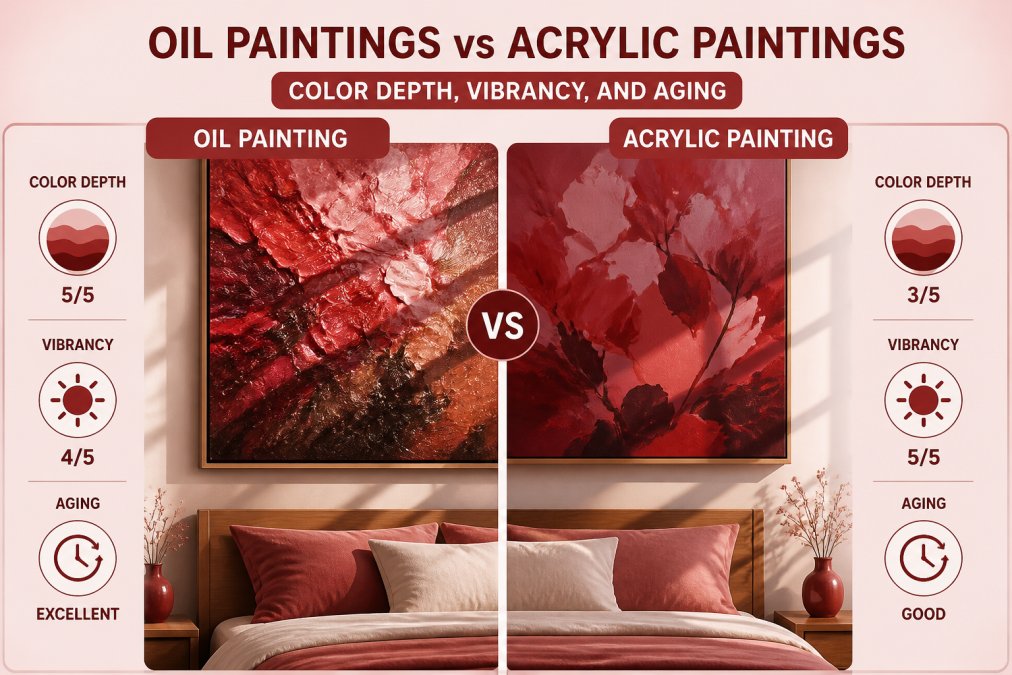
Lightfastness, how well pigments resist fading from light exposure, varies by pigment choice in both mediums. High-quality oils and acrylics use lightfast pigments that resist fading. Lower-quality versions may fade noticeably over time, especially in bedrooms with strong natural light. At Aartzy, we source artwork from artists using quality materials, so lightfastness is built in regardless of medium.
How to Choose Bedroom Wall Art by Medium
Your medium choice depends on three practical factors: your bedroom's sensory environment, your aesthetic preference, and your timeline.
Choose oil if: You want gallery-quality presence, you're comfortable with a 3-4 week curing period with strong odors, your bedroom has good ventilation, you appreciate the traditional collector's aesthetic, and you accept that colors will warm slightly over 15+ years. Oil works beautifully in master bedrooms with dedicated art walls, where the investment in time and odor tolerance pays off in visual impact.
Choose acrylic if: You want immediate installation with zero odor, you prefer contemporary aesthetics, color stability matters to you, your bedroom is smaller or has limited ventilation, or you're building a collection over time and want lower entry costs. Acrylics excel in guest bedrooms, children's rooms, and spaces where fast turnaround and low odor are priorities.
Consider your bedroom's lighting too. Oil paintings' reflective qualities shine in rooms with controlled, warm lighting, think bedside lamps and dimmers. Acrylic's matte finish works well in naturally lit bedrooms where you want the artwork to read clearly without glare.
Also consider the artwork's subject matter. Moody, atmospheric pieces, like landscapes or abstract compositions with depth, often feel more natural in oil. Contemporary, graphic, or highly textured pieces frequently suit acrylic better.
Large Canvas Art for Bedroom: Size, Placement, and Care
Bedroom artwork scale matters more than most people realize. A small painting in a large bedroom gets lost; an oversized piece overwhelms a modest space.
For most bedrooms, a large canvas should occupy 25-40% of the wall space where it hangs. Above a bed, that typically means 48-72 inches wide. Above a dresser or accent wall, 36-60 inches works well. Pieces like Bridge Over Calm Waters at substantial scale create focal points that anchor the room without dominating it.

Placement follows basic principles: center artwork on the wall or furniture piece it's meant to complement. Hang it at eye level, approximately 57-60 inches from floor to center of the frame. In bedrooms, slightly lower placement (55-58 inches) often feels more intimate and relaxing than standard gallery height.
Lighting matters for both mediums. Position artwork where it catches soft, indirect light. Avoid harsh afternoon sun, which fades both oil and acrylic over time. If your bedroom gets strong southern or western light, consider UV-protective glass or a location on a different wall.
Care differs slightly between mediums. Oil paintings should be dusted gently with a soft, dry brush, never cleaned with water or solvents unless professionally restored. Acrylic paintings can be dusted the same way but are slightly more durable if you accidentally brush them with a damp cloth. Both mediums benefit from stable temperature and humidity. Bedrooms with extreme temperature swings or high moisture (attached bathrooms) can stress the canvas and paint layers over time.
Varnishing offers protection. Oil paintings typically receive a final varnish layer as part of the artist's finishing process. Acrylic paintings sometimes receive varnish too, though many artists leave them unvarnished. Varnish protects against dust and fading but changes the surface finish, something to discuss with the artist if you're commissioning work.
Finding Your Perfect Bedroom Painting at Aartzy
Every piece ships free worldwide. Explore examples like Dance Of Colors And Wings Painting, a vibrant acrylic that demonstrates how color and contemporary aesthetics transform bedroom spaces. When you buy from Aartzy, you're supporting Sri Lankan creativity while bringing authentic, one-of-a-kind art into your home.
Explore our curated collection of original paintings, discover artists whose work resonates with your space, and invest in pieces that will anchor your bedroom for years to come. Learn more about art conservation and preservation
Frequently Asked Questions
Are oil paintings better than acrylic paintings for a bedroom?
Neither is universally better, it depends on your priorities. Oil paintings offer richer color depth and extended blending, making them ideal if you want artwork that deepens over time and handles layering beautifully. Acrylic paintings dry fast, have minimal odor, and work well in bedrooms where ventilation is limited. Oil paintings require more curing time and better airflow, while acrylics are water-based and easier to maintain. Choose oil if you value traditional finish and aging character; choose acrylic if you prefer quick-drying, low-odor artwork that's simpler to care for.
Do oil paintings take longer to dry than acrylic paintings?
Yes, significantly. Acrylic paintings dry within hours to days because they're water-based and the water evaporates quickly. Oil paintings cure over weeks or months, depending on thickness and pigment type. For bedroom placement, this matters: acrylic artwork is ready to hang almost immediately, while oil paintings need extended curing time and proper ventilation before the painting fully stabilizes. If you're impatient to display your art or have ventilation concerns, acrylic is the faster choice.
How do you choose the right painting size for a bedroom?
Measure your wall space and follow the 60-75% rule: the artwork should cover about 60-75% of the wall area above your furniture. For a bed wall, a large canvas art piece (36-48 inches wide) creates a focal point without overwhelming the room. Consider ceiling height and furniture scale, larger bedrooms support bigger canvases, while smaller rooms benefit from medium-sized pieces. Also think about lighting: oil paintings with their reflective finish work well in bright rooms, while matte acrylic finishes suit softer, indirect bedroom lighting. Visit Aartzy to explore original pieces in various sizes that fit bedroom proportions.
Which type of painting is easier to care for in a bedroom?
Acrylic paintings are easier to maintain. They don't yellow over time, resist dust better, and can be gently cleaned with a soft, dry cloth. Oil paintings require more careful handling: they can yellow with age, are sensitive to temperature and humidity changes, and need varnish protection for long-term preservation. For bedroom care, acrylic's water-based composition and stability make it the lower-maintenance choice. If you select an oil painting, ensure your bedroom has stable temperature and humidity to protect the artwork's longevity.
Can you hang an oil painting in a bedroom?
Yes, but with considerations. Oil paintings emit fumes during curing (weeks to months), so your bedroom needs adequate ventilation to avoid odor buildup. Avoid placing oil paintings directly above heat sources or in rooms with high humidity or temperature fluctuations, which can damage the paint layer and cause cracking. Once fully cured, oil paintings are stable and safe in bedrooms. If ventilation is poor or you're sensitive to odors, acrylic is the better choice. Aartzy's acrylic options like Muddy Blue River ($689.99) offer beautiful, low-odor alternatives for bedroom spaces.
