
Table of Contents
- Why 2026 Is the Moment to Begin Collecting Art
- Art Collecting for Beginners: Set Your First Budget
- How to Start an Art Collection on a Budget Without Regret
- How to Verify Art Authenticity Before You Buy
- Where to Buy Art: Galleries, Fairs, and Online Platforms
- Art Investment Tips for Beginners: Passion Meets Portfolio
- Caring for Your Collection: Storage, Insurance, and Logistics
- Your First Acquisition: A Practical Checklist
- Frequently Asked Questions
Last Updated: September 7, 2026
Why 2026 Is the Moment to Begin Collecting Art
The art market is in a period of profound recalibration, making it an exceptional entry point for new collectors. Digital platforms have democratized access, allowing buyers to connect directly with artists and galleries across the globe, a shift that has fundamentally changed how art is discovered and purchased. This guide from AARTZY walks you through the essential steps of starting your collection with confidence and clarity.
Art collecting is the practice of acquiring artworks not just for aesthetic enjoyment, but often as a meaningful engagement with culture and, for some, a component of financial planning. The most successful new collectors begin with a clear thesis about what they love, rather than chasing trends or speculative returns.
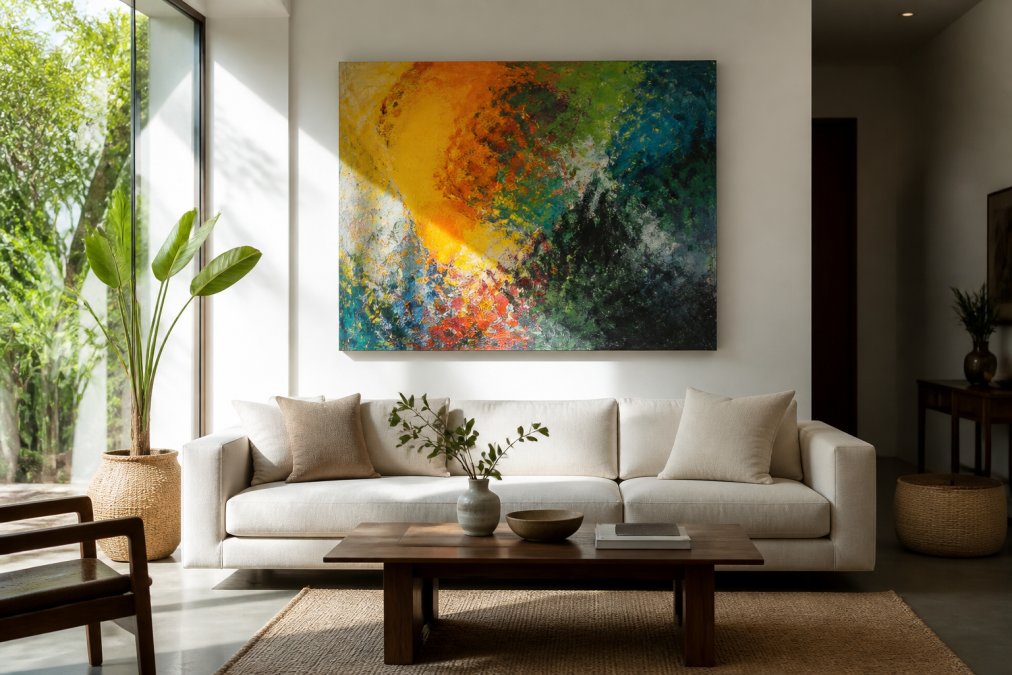
The barrier to entry has never been lower. Online galleries and marketplaces now offer verified works from emerging and established artists worldwide, removing the intimidation factor of traditional gallery visits. This accessibility means your first acquisition can happen from your living room, but it also demands a more rigorous approach to research and verification.
Art Collecting for Beginners: Set Your First Budget
Before you browse a single piece, you need a financial framework that protects your wallet and your enthusiasm. The most common regret among new collectors isn't buying the wrong art; it's spending money they couldn't afford to part with. Your budget should feel comfortable, not aspirational.
A practical starting point is to allocate a specific percentage of your annual discretionary income to art (sec.gov). For many, this lands between 1% and 5%, but the right number is personal. The goal is to build a collection that brings you joy without creating financial strain or anxiety.
The 70/30 Rule and Other Budgeting Frameworks
A useful framework for beginners is the 70/30 rule. This suggests allocating 70% of your art budget to pieces you genuinely love, regardless of their investment potential, and reserving 30% for works that feel like calculated risks with growth potential. This balance allows you to collect from the heart while keeping a toe in the investment waters.
Another approach is the "one significant piece per year" strategy. Instead of spreading a small budget across many minor works, you save for a single, more substantial acquisition annually. This method encourages patience, deeper research, and often results in a more cohesive and meaningful collection over time.
How to Start an Art Collection on a Budget Without Regret
Starting a collection with limited funds is not a limitation; it is a creative constraint that often leads to more thoughtful choices. The key is to focus on the primary market, where you buy directly from artists or their representatives, rather than the often pricier secondary market. This is how to start an art collection on a budget that you can sustain.
Begin by exploring emerging artists whose careers are on the rise. Their prices are typically more accessible, and you have the satisfaction of supporting their practice from an early stage. Look for artists who have consistent exhibition histories, clear artistic development, and a growing presence in reputable galleries or online platforms.
Consider original works on paper, which are often far more affordable than large canvases. Drawings, watercolors, and limited edition prints offer a low-cost entry point into an artist's world while retaining authenticity and collectability. A high-quality print with a certificate of authenticity is a legitimate and rewarding starting point.
How to Verify Art Authenticity Before You Buy
Authentication is the bedrock of trust in the art world, and it is your primary defense against costly mistakes. A common mistake is assuming that a gallery or a high price tag guarantees authenticity. You must perform your own due diligence on every piece, regardless of the source.
Start by asking the seller directly about the artwork's history and the artist's background. A legitimate seller will be transparent and provide documentation without hesitation. Their willingness to answer detailed questions is a strong signal of credibility. If they are evasive or dismissive, treat it as a red flag.
What to Check: Provenance, Certificates, and Artist Verification
Provenance is the documented history of an artwork's ownership. A clear, unbroken chain of custody from the artist to the current seller significantly increases confidence in authenticity. Ask for any available documentation, such as past invoices, exhibition records, or gallery receipts.
Certificates of Authenticity are crucial. For original works, this document should be signed by the artist or their authorized representative and include specific details about the piece, such as title, medium, dimensions, and date of creation. For prints, it should also state the edition number and total edition size.
Verifying the artist themselves is equally important. Research their exhibition history, check if they have gallery representation, and look for a professional artist statement. For emerging artists, their online presence and past sales can provide valuable context. You can also consult resources on authentication standards and best practices from the Federal Trade Commission's guidance on art authentication to understand what protections apply to your purchase.
Where to Buy Art: Galleries, Fairs, and Online Platforms
Your choice of marketplace shapes your entire collecting experience, from the price you pay to the level of support you receive. Each channel offers distinct advantages, and understanding them helps you select the right one for each acquisition.
Galleries provide the most traditional and supportive entry point. A reputable gallery curates its artists, manages their careers, and offers you a layer of expertise and validation. They are excellent for building relationships and receiving guidance, but their prices often reflect these overheads. Galleries operating in the primary market are your best partners for discovering and supporting emerging talent.
Art fairs offer an unparalleled opportunity to survey the market in a single location. They allow you to compare artists, mediums, and price points across dozens or hundreds of galleries at once. However, the fast-paced environment can be overwhelming, and prices are often at a premium. They are best for research and for making connections you can follow up on later.
Online platforms have become the most accessible route for new collectors. They offer global reach and transparent pricing. When using these platforms, your verification process becomes even more critical, as you cannot physically inspect the work. Look for platforms that provide detailed imagery, strong artist information, and clear return policies.
Art Investment Tips for Beginners: Passion Meets Portfolio
Forget the idea that you must choose between art you love and art that appreciates. The most durable collections are built on passion, with investment potential as a secondary consideration. Art investment tips for beginners always circle back to one principle: buy what you love, and the financial picture often takes care of itself.
Your taste is your most valuable asset. It will guide you to works that you will live with happily, which is the true return on your purchase. A piece you love but that loses value is still a source of daily joy; a piece you bought purely for speculation and that fails to perform is a constant reminder of a bad bet.
Understanding Primary vs. Secondary Markets
The primary market is where art is sold for the first time, directly from the artist or their representing gallery. Prices here are set by the artist and gallery, and they reflect the current stage of the artist's career. This is where you find emerging artists and where your budget goes furthest.
The secondary market involves the resale of art that has already been sold once. This happens through auction houses and private dealers. Prices here are driven by demand and the artist's established market history, which can be significantly higher than primary market prices. This is where blue-chip and investment-grade art is typically traded.
A practical strategy for new collectors is to focus on the primary market. This allows you to support living artists directly and acquire works at their most accessible price point. As an artist's career progresses, the value of your early acquisitions may grow. For a deeper understanding of market dynamics and valuation, resources from the U.S. Securities and Exchange Commission on art as an asset class offer a regulatory perspective on its financial aspects.
Caring for Your Collection: Storage, Insurance, and Logistics
Once a piece arrives in your home, your responsibility as a collector begins. Proper care protects your financial investment and ensures the artwork's longevity. Neglecting these basics can lead to irreversible damage and a loss of value.
Framing and display are your first line of defense. Use archival-quality materials to protect works on paper from acid degradation. Hang pieces away from direct sunlight, which can fade pigments, and avoid areas with high humidity, like bathrooms or kitchens. Stable environmental conditions are critical for all mediums.
Insurance is a non-negotiable step for any piece of significant value. Many standard homeowner's policies have low limits for art. You should contact your provider to discuss adding a scheduled personal property rider or a separate fine art policy. This ensures you are covered for loss, theft, or damage, which is a crucial consideration when you are shipping art across the globe. When purchasing online, verify how the seller handles transit insurance. Platforms that specialize in art, like AARTZY, typically build secure logistics and insurance into their shipping process.
Storage matters even for pieces on your wall. Keep records of your purchases, including receipts, certificates, and images, in a safe place. If you acquire more than a few pieces, consider a professional art storage facility for works you are not actively displaying. These facilities offer climate-controlled environments and security that a home cannot match.
Your First Acquisition: A Practical Checklist
Before you make your final decision, run through this checklist to ensure you are making a sound purchase. This process prevents impulse buys and confirms that you have done your due diligence.
- Define Your Space: Where will this piece live? Measure the wall space or shelf to ensure the dimensions work.
- Set a Firm Budget: Know your ceiling price and do not exceed it. Remember to factor in shipping, framing, and potential import costs.
- Research the Artist: Review their biography, artist statement, and exhibition history. Confirm they have a consistent body of work.
- Request Full Documentation: Ask for a certificate of authenticity, proof of provenance, and high-resolution images of the work, including the back and edges.
- Clarify the Medium: Confirm whether you are buying an original, a print, or a sculpture and understand the exact materials used.
- Review the Return Policy: Understand the seller's terms for returns and their policy on damaged goods during transit.
- Confirm Shipping and Insurance: Know who handles logistics, the expected delivery time, and who is responsible for the piece until it is in your hands.
- Trust Your Instincts: Does the piece excite you? Will you be happy to live with it for years? If the answer is not a clear yes, pass.
Following this checklist ensures your first acquisition is a source of pride, not regret. It transforms the process from a simple transaction into a thoughtful act of cultural patronage.
Building a collection is a journey of discovery that enriches your home and your understanding of the world. The challenge is to stay true to your own aesthetic while navigating a market that can feel complex and intimidating. At AARTZY, we make this journey accessible by connecting you directly with a curated community of Sri Lankan artists, offering original paintings, prints, and sculptures that carry authentic cultural narratives. Our platform handles worldwide shipping and supports local artisans with every purchase. Begin your collection today and bring a meaningful piece of art into your life.
Frequently Asked Questions
How much money do I need to start collecting art in 2026?
You can start with less than you think. The primary market offers original works by emerging artists starting in the low hundreds. Set a budget you are comfortable spending on pieces you genuinely love. Many online galleries offer payment plans or high-quality prints as an entry point. Focus on acquiring fewer, better pieces rather than many mediocre ones.
What is the 70/30 rule in art collecting?
The 70/30 rule is a budgeting guideline for collectors. It suggests allocating 70% of your art budget to pieces you personally love and want to live with, and 30% to works you believe have strong investment potential. This framework ensures your collection reflects your taste while still giving you exposure to the market's upside.
How do I verify the authenticity of an original painting before buying?
Request a certificate of authenticity signed by the artist, and ask for provenance documentation that traces the work's history. Check for gallery representation and an artist statement. For higher-value pieces, consider an independent appraisal. Reputable online galleries verify their artists and stand behind the works they sell.
Is art collecting a stable long-term investment for beginners?
Art can appreciate, but treat it as a passion investment first. The market has volatility, and liquidity is lower than stocks. Focus on acquiring works you love. Buy from the primary market to support artists directly. Diversify across mediums and artists to manage risk while building a collection with cultural value.
What should a beginner look for when buying art online?
Look for transparent provenance, clear images, and secure payment options. Verify the gallery's artist vetting process and read its shipping and insurance policies. Check if the platform offers a return window. Ask about the artist's exhibition history and whether the gallery provides a certificate of authenticity with the purchase.