
Table of Contents
- The Real Value of Buying Art Online
- Is Buying Art Online Safe? What You Need to Know
- How to Verify Art Authenticity Before You Buy
- Original Art vs Prints: Understanding the Difference
- Essential Tips for Buying Art Online Successfully
- Total Cost of Ownership and Investment Value
- Your Buying Art Online Checklist
- Frequently Asked Questions
Last Updated: October 20, 2026
The Real Value of Buying Art Online
Is buying art online worth it? The short answer is yes, but only if you know what to look for. At AARTZY, we connect art collectors with authentic original art from emerging and established Sri Lankan artists, and we've learned that the online art market offers genuine value when you approach it strategically.

The real question isn't whether buying art online is worthwhile. It's whether you're buying from the right source and taking the right precautions. Online art marketplaces have democratized access to original art, prints, and sculptures that would otherwise require travel or connections to galleries. You can discover work from artists you'd never encounter locally, compare pieces across price points, and support creators directly, all from home.
But the stakes are real. Shipping damage, authenticity concerns, and pricing confusion stop many potential collectors before they start. This guide walks you through what actually matters when buying art online, how to verify what you're purchasing, and how to make decisions you won't regret.
Is Buying Art Online Safe? What You Need to Know
Buying art online is as safe as buying art in person, provided you take basic precautions. The biggest risks aren't the internet itself; they're shipping, seller credibility, and understanding what you're actually purchasing.
Seller Verification and Platform Transparency
Not all online art platforms are equal. The difference between a legitimate marketplace and a risky one comes down to transparency about the artists and the pieces they represent.
Look for platforms that clearly identify their artists. Legitimate galleries, whether physical or online, provide artist names, bios, and artist practice details. At AARTZY, every piece is attributed to a named artist with information about their background and work. If a seller lists "artist unknown" or uses vague descriptions, that's a red flag.
Check whether the platform verifies its sellers. Some marketplaces require artist verification before listing work. Others allow anyone to upload. Read the seller's profile thoroughly: How long have they been active? Do they have reviews? How do they handle disputes?
Payment security matters. Use platforms that offer buyer protection, credit cards, PayPal, or escrow services that hold funds until you confirm receipt of your piece. Avoid wire transfers or payments that can't be reversed.
Shipping, Insurance, and Damage Protection
Shipping is where most online art purchases go wrong. Original paintings, sculptures, and high-quality prints are fragile. Damage in transit is common, and the question isn't if it happens, it's whether your seller takes responsibility when it does.
Ask about shipping insurance before you buy. Does the seller include it in the price? Is it optional?
Understand the seller's damage policy explicitly. Will they replace the piece? Refund you? Require photos as proof? Get this in writing before purchasing. Legitimate sellers are transparent about this. Hesitation or vague answers suggest they won't help if something goes wrong.
Check packaging descriptions.
Free worldwide shipping is appealing, but it sometimes means corners are cut on packaging. At AARTZY, free worldwide shipping includes secure packaging and tracking, you're not sacrificing protection for convenience.
How to Verify Art Authenticity Before You Buy
Authenticity anxiety stops many collectors from buying online. You can't hold the piece in your hands or see it under gallery lighting. How do you know it's real?
Provenance and Certificate of Authenticity
Provenance, the documented history of an artwork, is your strongest verification tool. Original art from reputable sellers comes with information about its creation, previous ownership, and exhibition history. For contemporary art from living artists, the artist themselves often provide this documentation.

Ask for a certificate of authenticity. For original paintings and sculptures, this document should state the artist's name, the piece's title, creation date, medium, dimensions, and signature details. It serves as proof that you own an authentic work by the attributed artist.
Artist Research and Practice Verification
Before committing to a purchase, research the artist. This takes 15 minutes and prevents costly mistakes.
Search for the artist's name online. Do they have a website? Instagram? Are they represented by galleries or other platforms? Do multiple sources mention their work? Legitimate artists have a documented practice. Emerging artists may have less presence, but they should have some verifiable footprint.
Look at their body of work. Does the piece you're considering match their style and technique? If an artist's portfolio shows only abstract work and you're buying a photorealistic piece attributed to them, something's off.
Check whether the artist has exhibited their work. Galleries, museums, art fairs, and group shows all add credibility. Artists who've shown their work have third-party validation.
Original Art vs Prints: Understanding the Difference
This distinction matters because it affects value, authenticity, and price. Many collectors confuse the two, which leads to disappointment.
Original art is a one-of-a-kind or limited piece created directly by the artist, a painting, drawing, or sculpture made by hand. Each original is unique. There is no "copy" elsewhere. Original art commands higher prices because of scarcity and the artist's direct involvement.
Prints are reproductions of original artwork. An artist or photographer creates an original image, then produces multiple copies using printmaking techniques or digital printing. Prints are more affordable and accessible than originals, but they're not unique.
Both have legitimate value. Prints can be beautiful, well-crafted, and meaningful additions to your home. But they're not interchangeable with originals in terms of investment potential or rarity.
Edition Size and Printmaking Techniques
If you're buying a print, edition size is critical. This number tells you how many copies of that print exist.
A limited edition print might be "5 of 50," meaning only 50 copies were made and this is number 5. Once all 50 are sold, no more will be printed. Limited editions hold value better than open editions (unlimited copies). Closed editions, where the artist has destroyed the printing plate or file, are most valuable because no more can ever be made.
Printmaking technique affects quality and price. Screen printing, lithography, etching, and giclée printing each produce different visual results and durability. High-quality prints use archival materials that resist fading for decades. Budget prints may fade within years.
Essential Tips for Buying Art Online Successfully
Evaluating Scale, Color, and Quality from Photos
You can't step back and view the piece in your space before buying, which creates real challenges. Photos lie about size, color, and texture.
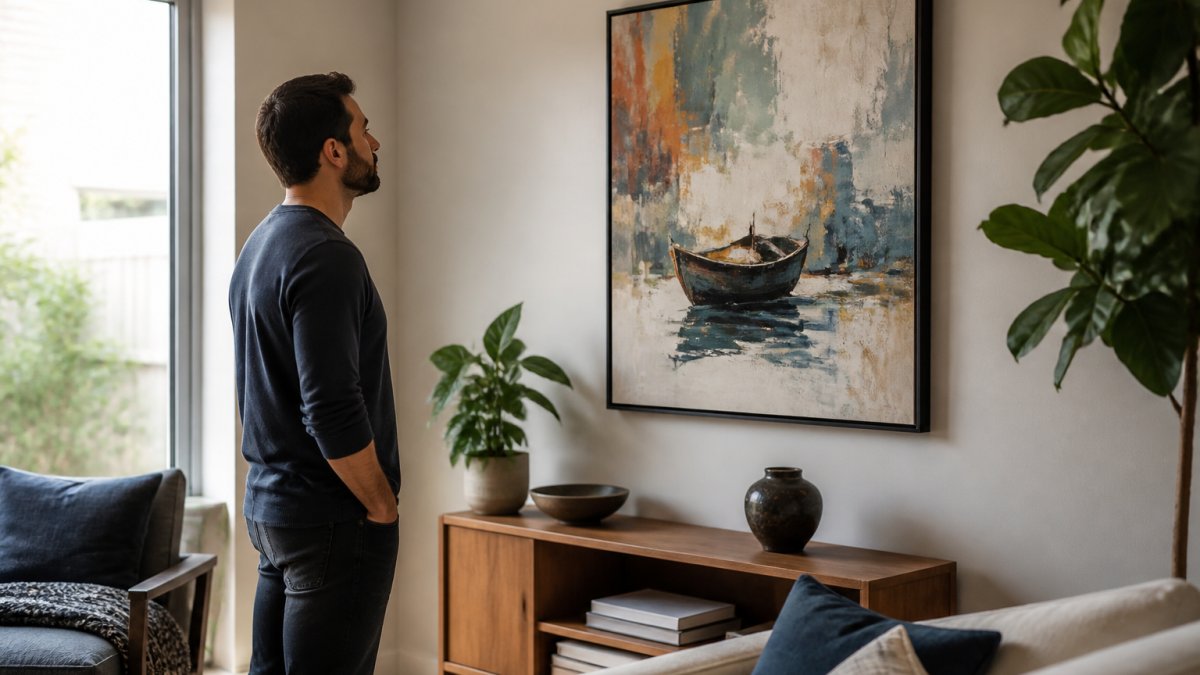
Ask for dimensions in inches or centimeters. Don't rely on photos to judge scale. A 12-by-16-inch painting looks very different on your wall than a 3-by-4-inch print. Request photos showing the piece next to a known object, a hand, a ruler, or a framed photo, for reference.
Color reproduction in photos is notoriously unreliable. Screen settings, lighting, and camera quality all distort what you see. Ask the seller whether the photos have been color-corrected. Better yet, ask for multiple photos taken under different lighting conditions. If the seller provides only one photo, that's a limitation worth noting.
Request close-up photos showing brushwork, texture, and detail. This reveals the piece's actual quality and technique. Pixelated or blurry close-ups suggest the seller is hiding something.
Consider asking for a video walkthrough. Some sellers will send a short video of the piece in natural light, which gives a much better sense of color and texture than still photos.
Assessing the Artist and Their Work
An artist's reputation and practice directly affect the piece's value and your satisfaction with it.
Look at their previous work. Does the piece you're buying represent their typical quality and style? Artists improve over time, so recent work is often stronger than older pieces. If you're buying an older work, understand that it may not reflect the artist's current skill level.
Check whether the artist is actively creating.
Total Cost of Ownership and Investment Value
Many collectors focus only on the purchase price and ignore the full cost of ownership. This leads to surprises.
Beyond the artwork's price, factor in shipping costs (unless included), insurance, framing (if needed), and potential conservation or restoration.
Consider the piece's investment potential realistically. Original art by emerging artists may appreciate, but there's no guarantee. Some pieces hold value; others don't.
Art's primary value is personal. You should buy because you love it and want to live with it, not because you expect financial returns. If the piece brings you joy and fits your space and budget, the investment is sound regardless of resale value.
Your Buying Art Online Checklist
Before you commit to any purchase, work through this checklist:
| Verification Step | What to Check | Why It Matters |
|---|---|---|
| Seller identity | Platform verification, reviews, history | Confirms legitimacy |
| Artist credentials | Website, exhibitions, body of work | Validates artist authenticity |
| Documentation | Certificate of authenticity, provenance | Proves ownership legitimacy |
| Shipping & insurance | Packaging details, insurance options, damage policy | Protects against loss |
| Authenticity | Original vs. print, edition size, materials | Affects value and satisfaction |
| Scale & appearance | Dimensions, multiple photos, color accuracy | Ensures it fits your space |
| Total cost | Purchase price + shipping + insurance + framing | Prevents budget surprises |
| Return policy | Refund terms, damage claims process | Provides recourse if needed |
Use this as your decision framework before clicking "buy now."
Buying art online is worth it when you approach it with intention. The key is understanding what you're purchasing, verifying the seller's credibility, and protecting yourself against common pitfalls like shipping damage or authenticity concerns.
At AARTZY, we've built our platform around these principles. Every artist is verified, every piece comes with secure packaging and free worldwide shipping, and our customer support team is here when questions arise. We connect you directly with Sri Lankan artists, both emerging and established, so you're not just buying a beautiful piece; you're supporting a creator and bringing authentic, story-driven art into your home. Start exploring original paintings, prints, and sculptures that speak to you. Add to cart and discover why buying art online, done right, is one of the most rewarding ways to build a collection.

Frequently Asked Questions
Is buying art online safe, and what protections do I have?
Buying art online is safe when you purchase from platforms with verified sellers, secure payment processing, and buyer protection policies. Reputable galleries offer guarantees on authenticity, insurance during shipping, and clear return policies. Always verify the seller's credentials, ask about their shipping and damage protocols, and confirm they provide certificates of authenticity for original artwork. Platforms like AARTZY offer free worldwide shipping with tracking and secure payment to protect your investment.
How can I tell if art sold online is original versus a mass-produced copy?
Original artwork comes with provenance documentation, a certificate of authenticity, and artist credentials. Ask the seller for the artist's background, exhibition history, and whether the piece is a limited edition or one-of-a-kind. Request high-resolution images, dimensions, and materials used. Legitimate artists and galleries are transparent about their practice and willing to answer detailed questions about the work's creation and history.
What's the difference between buying original art and prints online?
Original artwork is a one-of-a-kind piece created directly by the artist, typically commanding higher prices and holding greater investment potential. Prints are reproductions using printmaking techniques, often produced in limited editions with numbered certificates. Both can be valuable, limited edition prints from established artists hold their worth, while originals offer exclusivity and direct support to the creator. Consider your budget, space, and whether you're collecting for personal enjoyment or investment when choosing between them.
What should I check before buying art online to avoid costly mistakes?
Before purchasing, verify the artist's legitimacy through their portfolio and exhibition history. Examine high-resolution images showing scale, materials, and condition. Confirm the seller's return policy, shipping insurance, and damage protection. Ask for dimensions in inches and materials used. Check customer reviews and buyer protection guarantees. Request a certificate of authenticity for original pieces. Finally, ensure the platform offers secure payment and clear communication channels for customer support.