
Table of Contents
- Why Buyers Are Looking Beyond the Gallery Model
- Quick Comparison: Five Authentic Pieces for Your Home
- How to Verify Authentic Art Before You Buy
- Original Sri Lankan Paintings: What Sets Them Apart
- Sri Lankan Art Prints: When a Reproduction Makes Sense
- How to Buy Art Directly From Sri Lankan Artists
- Pricing, Shipping, and Buyer Protections
- Conclusion: Choosing Authentic Decor With Confidence
- Frequently Asked Questions
Last Updated: October 7, 2026
Why Buyers Are Looking Beyond the Gallery Model
The traditional gallery model asks buyers to trust the curator, pay an invisible markup, and hope the story checks out.
AARTZY provides artists with a platform for global exposure at no cost, ensuring that every piece you purchase supports the local creative community.
The five pieces range from $739.99 to $1,809.99, each an original hand-painted canvas. Most buying guides treat "authentic" as a feeling rather than a checklist, we'll give you the checklist.
Quick Comparison: Five Authentic Pieces for Your Home
Each is an original painting on canvas, professionally stretched or framed, ready to hang, and shipped in a crate with tracking. The differences come down to scale, palette, and story.
| Piece | Price | Medium | Best For | Standout Detail |
|---|---|---|---|---|
| Glorious Perahera | $1,019.99 | Acrylic on canvas | Lively entryways and living rooms | Festival procession with dancers and drummers |
| The Perahera | $1,809.99 | Acrylic on canvas | Statement walls in large rooms | Dense detail, dynamic movement, rich color |
| Cultural Symphony | $739.99 | Acrylic on canvas | First-time buyers and gift-givers | Red backdrop with musicians and celestial motifs |
| Royal Procession | $969.99 | Acrylic on canvas | Traditional interiors and offices | Ornate elephants, ceremonial figures, floral motifs |
| Ember Mask | $1,009.99 | Acrylic on canvas board | Dramatic, high-contrast spaces | Ceremonial mask with radiating flame tones |
For the most accessible entry point, Cultural Symphony at $739.99 delivers the full visual language of a procession painting. If the art is the focal point, The Perahera at $1,809.99 carries the most visual weight.

How to Verify Authentic Art Before You Buy
Authenticity verification comes down to documentation, materials, and the artist's traceable identity. Ask for all three before money changes hands, without them, you can't confirm what you're buying.
The Provenance Checklist
Run through this before you commit to any piece, whether from a gallery, a marketplace, or an artist directly:
- Artist's full name, confirmed against their portfolio or profile
- A signed certificate of authenticity or equivalent written statement
- Clear photos of the actual piece, not stock or catalog images
Documentation matters more than presentation: a modest painting with a clear paper trail beats a dramatic one with none.
Red Flags That Signal a Reproduction
A reproduction isn't fraud, but it shouldn't be sold as an original. Watch for:
- The listing uses the words "print," "replica," or "giclée" while the price suggests an original
- The same image appears across multiple sellers with different artist names attached
- No artist name is given at all, only a brand or store name
One caveat: "hand-finished print" means a print with painted touches. It's legitimate, but it is not an original painting and should be priced accordingly.
Original Sri Lankan Paintings: What Sets Them Apart
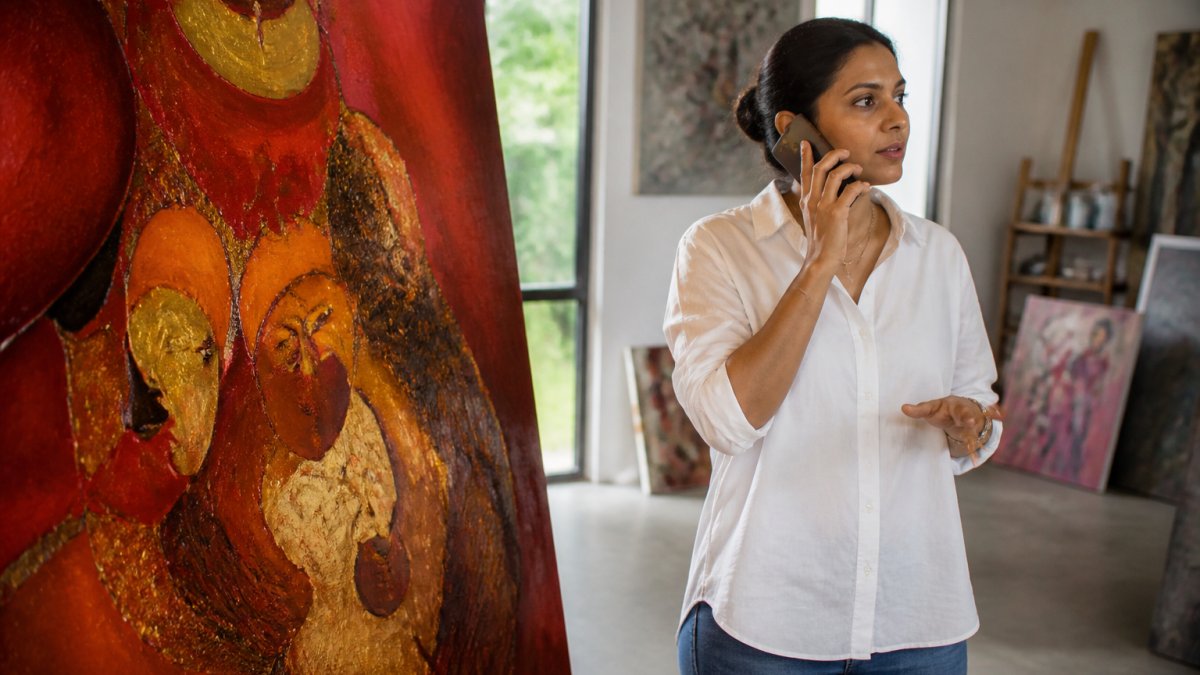
An original painting is a one-of-a-kind work made by hand. That fact drives the texture, the color depth, and the knowledge that nobody else owns the same piece.
Materials and Craftsmanship
Our pieces are professionally stretched or framed, and ready to hang. Acrylic holds color well and suits the layered, saturated palettes common in procession and mask paintings; canvas board pieces tend to be more compact.
Framing and stretching are not afterthoughts: a canvas that arrives ready to hang saves a trip to the framer and removes the risk of damaging the surface.
Cultural Symbolism in Traditional Motifs
Procession paintings draw on the Perahera, the grand festival procession with decorated elephants, dancers, and drummers. Elephants signal grandeur and tradition, flames and celestial motifs carry sacred, celebratory weight, and masks represent protection and ritual intensity.

Symbolism changes how you hang the work: a piece built around protection and strength reads differently in an entryway than a soft floral study does in a bedroom.
Sri Lankan Art Prints: When a Reproduction Makes Sense
A print makes sense when budget, scale, or humidity risk make an original impractical, covering a large wall, rotating pieces seasonally, or testing a style before investing.
That said, a print will not carry the same texture or resale character as an original. If your goal is a long-term piece with lasting character, an original is the better call.
Prints vs. Originals: Price and Longevity
Originals in our catalog run from $739.99 to $1,809.99; prints cost a fraction of that. The trade-off is longevity and uniqueness: an original can be passed down, while a print is replaceable by design.
For a first purchase, many buyers start with a smaller original rather than a large print: the real thing at a manageable scale, and a lesson in what you like on your walls.
How to Buy Art Directly From Sri Lankan Artists
Buying direct means dealing with the artist or a platform that represents them, not a reseller adding markup without information. The upside is a shorter chain between maker and buyer; the requirement is doing your own verification.
Most guides stop at "buy from the artist", a slogan, not a shortlist. Here are the four real channels for authentic decor, what each is good at, and where each can go wrong.
The Four Channels, Compared by Buyer Need
1. Artist-direct sales. You contact the painter through their site, social profile, or a studio visit.
2. Galleries and curated platforms. A gallery or curated online platform selects work, handles photography, and often manages framing and shipping.
3. Craft cooperatives and artisan groups. These aggregate work from many makers, often in a specific region or craft tradition.
4. Online marketplaces. Broad platforms list originals and mass-produced reproductions in the same search results. Best for: price comparison and discovery.
Matching the Channel to What You Actually Want
- You want one specific painting by one specific artist → artist-direct or a curated platform that names the artist.
- You want a traditional mask or carving → a craft cooperative or a gallery that specializes in craft.
- You want to compare many options at many price points → a marketplace, then verify the shortlist through the provenance checklist above.
What to Ask Before You Commit
- Who is the artist, and where can I see more of their work?
- Is this an original or a reproduction?
- What are the exact dimensions, and is it framed or unframed?
That last question separates platforms. AARTZY lists artists at no cost, so creators keep more of each sale instead of surrendering a commission.
Ethical and Culturally Respectful Sourcing
Authenticity isn't only about who painted the piece, it's also about fair pay for the maker and honest representation of the work's cultural meaning.
- Ask how the artist is compensated. A platform that charges artists nothing to list, or that publishes its commission structure, is easier to trust than one that stays silent.
- Look for cultural context, not just cultural decoration. A listing that explains the Perahera, the meaning of a mask, or the role of a motif is treating the tradition as more than a color palette.
- Be wary of sacred imagery sold as a trend. Some motifs carry ritual significance. If a seller can't explain what a symbol means, they may not be the right source for it.
Buyers happy with a purchase years later can usually still name the artist. Apply that test before you buy, not after.
Pricing, Shipping, and Buyer Protections
Original art pricing reflects the artist's time, materials, and reputation, so there's no universal benchmark. What you can control is the total cost and its protections, ask for the full landed cost: piece, shipping, duties, and insurance.
Here's what the landed cost actually contains, and what to confirm before you pay.
What Goes Into the Total Cost
- The piece itself. Originals in our catalog run from $739.99 to $1,809.99; prints and smaller decorative objects sit well below that.
- Shipping. A stretched or framed canvas ships in a crate, costing more than a rolled tube. Some sellers include shipping in the price, others quote separately, confirm which before comparing pieces.
- Framing and stretching. If a canvas arrives rolled, budget for a local framer; if it arrives ready to hang, that cost is already absorbed.
Payment Security
- Pay through a processor with buyer protection, not an informal transfer with no recourse.
- Keep the invoice, listing description, and all messages, if a piece arrives as a print when sold as an original, that record is your case.
- Use a payment method with a documented dispute process. A chargeback is a backstop, not a plan, but it matters when a seller goes silent.
Returns, Damage, and Disputes
Ask three questions in writing before you commit:
- What is the return window, and who pays return shipping?
- What is the process if the piece arrives damaged? A photo of the crate and damage, taken before discarding packaging, is usually required.
- Who do I contact if the seller stops responding? On a platform, its support team; in an artist-direct sale, possibly no one, the trade-off for a lower price.
What We Offer
Our pieces ship securely in a crate with tracking and worldwide shipping, and we don't charge for shipping. Secure payment processing and responsive support round out the transaction.
Conclusion: Choosing Authentic Decor With Confidence
The hard part of buying authentic decor isn't finding something beautiful. It's knowing what you're actually getting and who benefits from your purchase.
AARTZY exists to close that gap: original paintings, prints, and sculptures from Sri Lankan artists, global exposure for those artists at no cost, and worldwide shipping with secure payment processing and tracking on every order. Start with Cultural Symphony or Royal Procession, and bring a real story into your home.

Frequently Asked Questions
What are the best alternatives to a traditional Sri Lankan art gallery for authentic decor?
Online galleries that work directly with artists offer a strong alternative. They cut out the physical gallery markup, show you the artist's name and background, and ship securely. Look for platforms that list provenance, provide tracking, and offer buyer protections. Aartzy, for example, features original paintings and sculptures from Sri Lankan artists with free worldwide shipping and secure checkout.
How can I tell if a piece of Sri Lankan art is authentic?
Check for a named artist, a signed certificate or provenance document, and details about materials. Ask whether the piece is an original or a print. Original Sri Lankan paintings on canvas will show visible brushwork and slight variations in texture. Reproductions are usually perfectly flat and may have a printed signature. A trustworthy seller will answer these questions without hesitation.
Is an original painting worth more than a print?
Yes, originals hold more value because they are one of a kind. A hand-painted piece like Glorious Perahera ($1,019.99) carries the artist's direct work and cannot be duplicated. Prints are more affordable and still support the artist, but they do not appreciate the same way. If you want lasting character and cultural significance, an original is the stronger investment.
How do I buy art directly from Sri Lankan artists safely?
Buy through a platform that verifies artist identities, uses secure payment processing, and offers tracking. Ask about the return policy and what happens if the piece arrives damaged. Aartzy ships in crates with tracking and provides customer support. Direct purchasing works best when the platform handles shipping logistics and payment protection so you are not exposed to risk.
What should I check before buying art from an online gallery?
Confirm the artist's name and background, request images of the actual piece (not stock photos), and ask about materials and dimensions. Check the return policy, shipping method, and whether tracking is included. Read the provenance details. If the seller cannot explain who made the piece and how it will reach you, walk away. Buyer protections and clear communication matter as much as the art itself.