
Table of Contents
- The Real Risks and Rewards of Buying Art From Unknown Artists
- How to Tell if an Artist Is Scamming You
- How to Verify Art Authenticity Before You Buy
- Certificate of Authenticity for Artwork: What It Must Include
- Questions to Ask an Artist Before Buying
- Payment, Shipping, Returns, and Marketplace Protections
- A Buyer-Safety Checklist for Unknown Artists and Artwork
- Conclusion: Buying Art for Enjoyment vs. Investment
- Frequently Asked Questions
Last Updated: October 5, 2026
The Real Risks and Rewards of Buying Art From Unknown Artists
Buying art from an unknown artist can be safe, but only when you treat it as a research task, not a gut purchase.
That gap between what you pay and what you can prove is where most buyer regret starts.
The rewards are real too. An emerging artist's original work often costs far less than a mid-career piece.
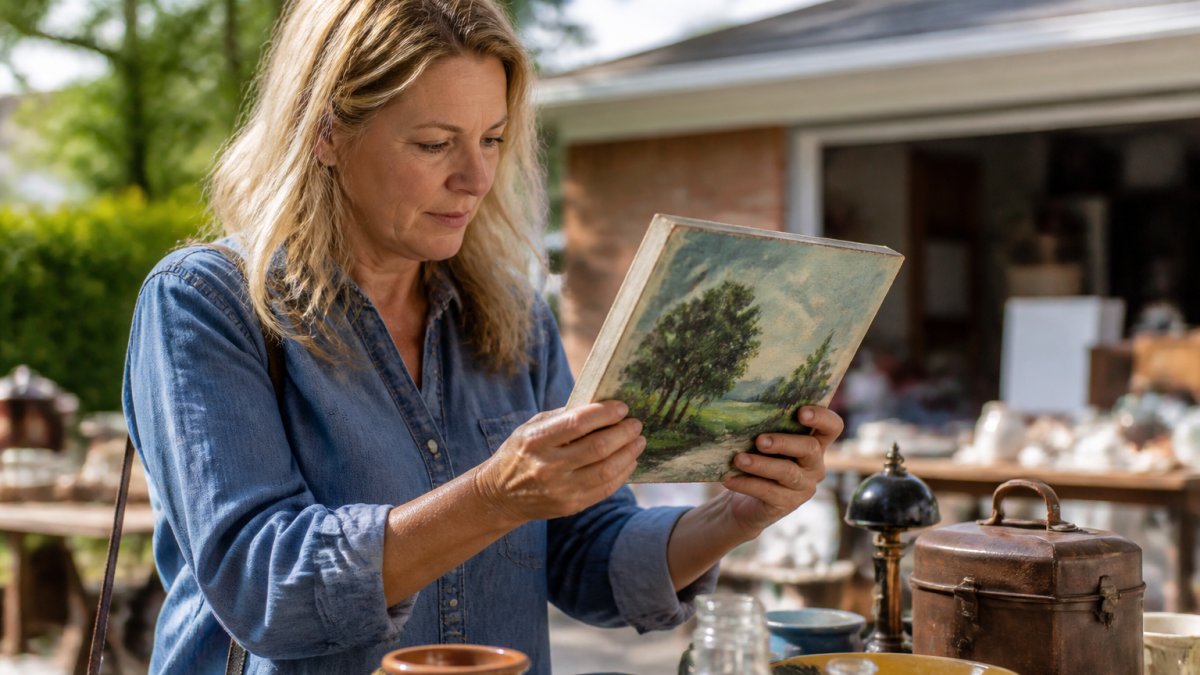
Here is the honest split:
- Reward: unique work, lower entry price, direct support for a working artist
- Risk: no resale value, thin documentation, hard-to-confirm attribution
- Reality: most "unknown artist" buys are fine for enjoyment, weak as investments
How to Tell if an Artist Is Scamming You
A scam usually shows up in the process, not the painting. Real artists answer questions. Scammers rush you, isolate you from any dispute process, and rely on you never checking whether they exist outside their own profile.
Watch for these warning signs:
- Pressure to pay outside a secure checkout, like a wire transfer, gift card, or peer-to-peer cash app
- No portfolio beyond a few low-resolution images, often reused across multiple seller accounts
- A story that changes each time you ask about the work
A common mistake is trusting a polished profile over a paper trail. Anyone can build a nice page. Fewer can show a consistent sales history.
How to verify an artist's identity and sales history
This is the step most buyers skip, and it separates a real seller from a convincing one. Run these checks before you pay:
- Confirm the name is consistent everywhere. Search the artist's name alongside the word "artist" and the medium. A real working artist usually appears in more than one place, a personal site, a gallery page, a social account, a local exhibition listing. If the only result is the sales page you are already on, treat that as a gap.
- Look for a body of work, not a single image. A working artist has a portfolio spanning months or years, with a recognizable style or progression. A scam account often shows a handful of unrelated images, sometimes lifted from other artists.
- Check for exhibition, gallery, or press records. Ask where the work has been shown or sold. Then verify it independently, a gallery listing, a show announcement, a local arts calendar. Verbal claims are not records.
- Ask for prior sales evidence. A legitimate seller can usually point to past buyers, a gallery that carries the work, or a marketplace profile with history. You do not need names, but you need something checkable.
- Verify contact details independently. A phone number, business address, or email on a custom domain is harder to fake than a direct message thread. Cross-check it against the artist's other public profiles.
- Reverse-search the images. Use an image search on the artwork photos. If the same image appears under a different artist's name, stop.
Ask one simple question: "Can you send me an invoice with the title, medium, size, and year?" A legitimate seller says yes without hesitation. A scammer stalls, changes the subject, or asks you to pay first.
The scam patterns that actually cost buyers money
Most losses come not from a fake painting but from one of these:
- The advance-fee or deposit scam. The seller asks for a deposit to "hold" the work, then disappears. Never send a deposit without dispute protection.
- The misrepresented reproduction. A print or digital reproduction sold as an original painting is not always fraud, but failing to disclose it is. Ask directly whether the piece is an original, a limited edition, or a reproduction, and get it in writing.
- The stolen-image listing. A scammer copies a real artist's photos and sells work that does not exist. Reverse-image search catches this.
If any of these patterns appear, walk away. There is always another artwork.
How to Verify Art Authenticity Before You Buy
Verifying art authenticity means confirming three things: who made the work, when it was made, and whether the seller has the right to sell it. You confirm these through documents, not opinions.
Start with what the seller provides:
- A signed certificate or written statement of origin
- Photos of the work from multiple angles, including the back
- The artist's signature or mark, matched against known examples
For prints, ask whether it is an original, a limited edition, or a reproduction. A textured print can look like a painting in a photo, not a scam by itself, but it must be disclosed.
If documentation is missing, you can still buy, but adjust your expectations. For guidance on what counts as a legitimate record, the U.S. Copyright Office on registration and ownership records explains how authorship and rights are documented.
Certificate of Authenticity for Artwork: What It Must Include
A certificate of authenticity for artwork is a signed document from the artist or gallery that identifies the work and confirms its origin. It is not a legal guarantee of value, but it is your main proof of attribution.
A useful certificate includes:
- Artist's full name and signature
- Title, year, medium, and dimensions
- Edition number, if it is a print
Here is what most buyers miss: a certificate proves the seller's claim, not the artwork's worth. Anyone can print one. Its value comes from who signs it and whether that person can be checked.
| Document | What It Proves | What It Does Not Prove |
|---|---|---|
| Certificate of authenticity | Origin and attribution | Market value |
| Invoice or receipt | Purchase and price paid | Authorship |
| Provenance record | Ownership history | Condition today |
| Condition report | Current physical state | Future resale price |
Keep all four together. If you ever resell, that folder is the difference between a serious buyer and a skeptical one.
Questions to Ask an Artist Before Buying
Direct questions save you money. Ask them before you pay, not after. The point is not just the answer, it is whether it produces a document you can keep.
Identity and track record
- How long have you been making and selling work?
- Where has your work been shown or sold before, and can you point me to a listing or announcement?
- Do you have prior buyers or a gallery that carries your work?
What to do with the answer: verify at least one claim independently. A show, a gallery page, or a marketplace profile with history is checkable. A verbal claim is not.
The work itself
- What materials did you use, and how should the piece be cared for?
- Is this an original, a limited edition, or a reproduction?
- If it is a print, what is the edition size, and is this number documented?
What to do with the answer: match the stated medium against the photos. A textured print can look like a painting in a photo. That is not a scam by itself, but it must be disclosed.
Documentation
- What does the certificate of authenticity include, and who signs it?
- Can you send an invoice listing the title, medium, size, year, and price?
- Do you have a condition report covering cracks, fading, repairs, and frame damage?
What to do with the answer: keep all four documents together, certificate, invoice, provenance record, and condition report. If you ever resell, that folder is the difference between a serious buyer and a skeptical one.
Transaction terms
- What is your policy on returns, damage, or shipping loss?
- Who pays if the piece arrives damaged?
- Is shipping insured and tracked, and is the price quoted up front?
What to do with the answer: get the return window and shipping terms in writing before payment. A seller who will not commit to terms in writing is telling you something.
Rights and ownership
- Does buying this piece transfer any reproduction rights?
- Can I display or resell the physical work?
What to do with the answer: know that buying a piece does not transfer reproduction rights. The U.S. Copyright Office guide to visual arts rights covers what ownership of a physical artwork does and does not include.
Pay attention to how they answer, not just what they say. Artists who have sold before tend to have clear, practiced answers and documents ready to send.
Payment, Shipping, Returns, and Marketplace Protections
Safe payment is the single biggest protection you control. Use a method with a dispute process, such as a credit card or a platform checkout.
Before you buy, confirm:
- Who pays if the piece arrives damaged
- Whether shipping is insured and tracked
- The return window and who covers return shipping
- What happens if the item never arrives
For international purchases, check that the seller handles customs paperwork and declares the value correctly.
The Federal Trade Commission guidance on online shopping and refunds explains your basic rights when an order is wrong, late, or never delivered.
A Buyer-Safety Checklist for Unknown Artists and Artwork
Run this checklist before every purchase from a new artist.
- Artist identity confirmed across at least two sources
- Portfolio shows a consistent body of work, not one-off images
- Certificate of authenticity included and signed
- Invoice lists title, medium, size, year, and price
If a seller resists any line on this list, that is your answer. Walk away.
Conclusion: Buying Art for Enjoyment vs. Investment
Buy for enjoyment and the risk drops sharply. Buy as an investment and you take on real uncertainty, because unknown artists rarely have a proven resale market.
A simple framework helps. If the piece is for your wall, judge it on how it makes you feel and whether the paperwork is clean.
At AARTZY, we built our gallery around the first path. We feature original paintings, prints, and sculptures from Sri Lankan artists, both experienced and emerging, all made with quality materials.
Add to cart with confidence, and bring a story home.
Frequently Asked Questions
How to tell if an artist is scamming you?
Watch for red flags: pressure to pay outside secure platforms, no verifiable identity or portfolio history, refusal to provide a certificate of authenticity, and prices far below market for claimed original work. Scammers often use stolen images or sell textured prints as originals. Ask for a live video call showing the artwork and studio, request documentation, and pay only through platforms with buyer protection. If the seller resists any verification step, walk away.
What should a certificate of authenticity for artwork include?
A valid certificate of authenticity should list the artist's full name and contact information, the artwork title, medium, dimensions, and year of creation, a unique identifying number or image, the edition size if it is a print, and the artist's signature. It should also state whether the work is original or a reproduction. Keep this document with your purchase records; it supports resale value and helps resolve any ownership or authenticity disputes later.
Is buying art from an unknown artist a good investment?
Treat purchases from unknown artists as high-risk investments. Most emerging artists never achieve significant market recognition, so resale value is uncertain. If your goal is financial return, research the artist's exhibition history, gallery representation, and sales records before committing. If your goal is personal enjoyment, the risk is lower because you value the piece regardless of market performance. Separate these two motivations before you buy.
How can you safely ship and insure original artwork?
Use a carrier experienced with fine art, require professional packing with archival materials, and purchase shipping insurance for the full declared value. Photograph the artwork before shipping and request signature confirmation on delivery. Inspect the package immediately upon arrival and report any damage within the carrier's claim window. When buying from a gallery, confirm who handles insurance during transit and what the return policy covers if damage occurs.